

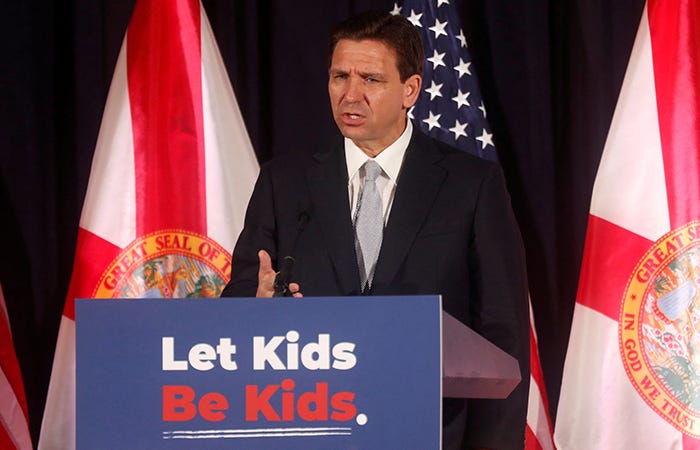
In a significant move aimed at safeguarding children’s mental health and well-being, Florida Governor Ron DeSantis signed a new bill into law on March 25th. This legislation bans children under the age of 14 from using social media platforms entirely and requires parental consent for those aged 14 and 15. The law represents a concerted effort to mitigate the adverse effects of excessive social media use among young people.
Key Provisions of the Law
• Age Restrictions: Children under 14 are prohibited from having social media accounts. For those aged 14 and 15, parental consent is mandatory.
• Account Termination: Social media platforms are required to terminate accounts belonging to users under 14 and those under 16 without parental consent.
• Age Verification: Platforms must implement third-party verification systems to enforce these age restrictions.
The Harms of Social Media on Children
Research has increasingly shown that social media can have detrimental effects on children’s mental health, education, and attention spans. Excessive use of these platforms has been linked to heightened levels of anxiety, depression, and other mental health challenges. The constant stream of notifications and the pressure to maintain an online presence can lead to stress and a distorted sense of self-worth.
Moreover, the impact on education is significant. Teachers and parents report that students who are frequently engaged with social media often struggle with concentration, leading to poorer academic performance. The allure of “infinite scrolling” and the addictive nature of likes and comments can detract from valuable study time, reducing students’ ability to focus on their schoolwork.
Legislative Journey
Initially, a more stringent version of the bill proposed banning all children under 16 from social media, but it was vetoed by Governor DeSantis, citing concerns about limiting parents’ rights. The revised law, which focuses on parental consent for older children, was passed by the Republican-led legislature and will come into effect on January 1, 2025.
While the bill does not specify particular social media platforms, it targets those that promote features such as infinite scrolling, reaction metrics like likes, auto-play videos, live-streaming, and push notifications. Exemptions are made for websites and apps primarily used for email, messaging, or texting.
Criticism and Opposition
Critics of the law argue that it infringes on First Amendment rights and that decisions about children’s online presence should rest with parents rather than the government. Meta, the parent company of Facebook and Instagram, has voiced opposition, citing concerns about parental discretion and data privacy issues related to age verification processes. Meta advocates for federal legislation to secure parental approval for children’s app downloads instead.
Lack of Action from Other States and Congress
Florida’s new social media law marks a pivotal step in addressing the digital age’s challenges and ensuring children’s online safety. By requiring parental consent and implementing stringent age verification, the legislation aims to create a safer online environment for young users. As the law takes effect, its impact on both children’s mental health and the broader social media landscape will be closely watched. However, the absence of similar measures in most states and at the federal level underscores the need for a more unified approach to protect children nationwide.
While Florida has taken decisive action, there remains a notable lack of similar efforts from other states and Congress. Despite widespread recognition of the mental health and educational issues linked to social media use among children, only a few states have enacted comparable legislation. This inaction leaves many young people across the country without the same protections, highlighting a significant gap in nationwide policy.
As Florida implements this groundbreaking law, the data collected on its impact will be invaluable in informing the national debate on social media regulation. By analyzing the outcomes in Florida, other states and Congress can better understand the effectiveness of such measures and the best practices for protecting children online. This case study could serve as a pivotal reference point, guiding future legislation to create a safer and healthier digital environment for children across the country.