


The silos are full, but the markets are empty
Across the country, soybean farmers — many of whom overwhelmingly supported Donald Trump — are staring at unsold crops and mounting debt. The irony is sharp: the very policies they voted for have left them on the brink of bankruptcy.
This is a clear-eyed case study in how political loyalty can be engineered to override material reality.
The Scale of the Crop and the China Dependency
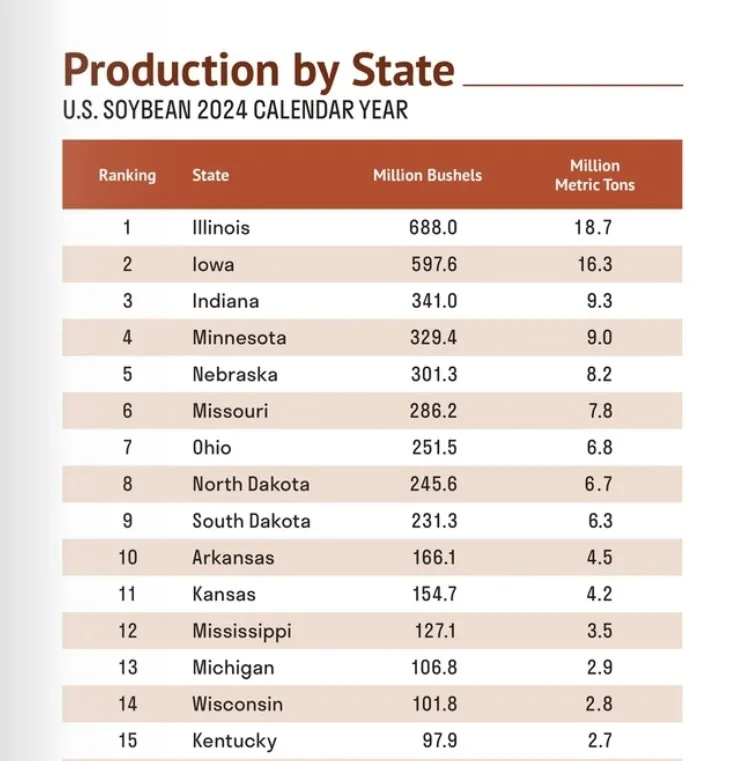
Soybeans aren’t a side hustle; they’re the number one U.S. agricultural export, a $50 billion industry that is the backbone of rural economies in the Midwest.
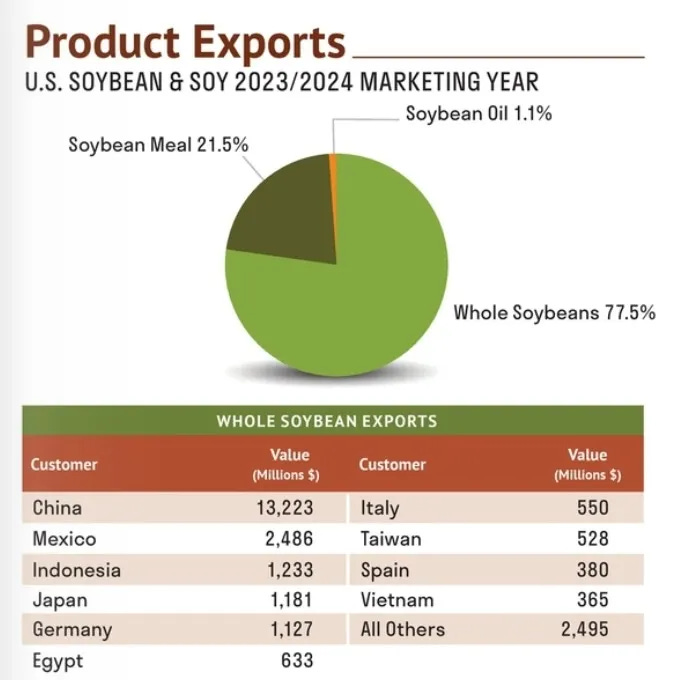
The entire structure of the American soybean market was heavily dependent on a single buyer: China. Historically, China purchased an average of 60% of all U.S. soybean exports and nearly 28% of all U.S. soybean production in the years leading up to the trade war. When China bought, the U.S. farm economy thrived. When China walked away, the entire system shook.
The 2018 Fallout: The First Warning
When the Trump administration imposed tariffs in 2018, China’s retaliation was swift and surgical: a 25% tariff on U.S. soybeans. This tariff, added to existing duties, effectively priced American soybeans out of the world’s largest market.
The financial damage was immediate and devastating:
The value of U.S. soybean exports to China shrank from an average of $12.8 billion per year before the trade war to $4.7 billion in 2018/19.
The U.S. Department of Agriculture estimated that soybean farmers alone experienced $9.4 billion in annualized losses during the 2018 trade war, accounting for 71% of the total loss in agricultural exports.
Instead of securing new markets, the administration relied on a political stopgap: a massive, taxpayer-funded rescue. Over $28 billion in trade aid was distributed through the Market Facilitation Program (MFP), making the federal government the single largest source of income for many farmers.
This was not a fix; it was a taxpayer-funded political bailout to pay farmers to endure an economic crisis of the administration’s own making. And despite this temporary injection, farm bankruptcies rose in 2019 to their highest level in nearly a decade.
The Current Crisis: The Cost of Amnesia
Five years later, the pattern is repeating with a chilling predictability. Today’s farmers are in a situation even more precarious than in 2018: they are harvesting a record crop with nowhere to sell it.
Markets Closed: China, in response to renewed U.S. tariff threats, has halted U.S. soybean purchases altogether.
Zero Bookings: As of October 2025, China has reportedly booked zero new-crop soybeans from the current U.S. harvest — down from purchasing $12.6 billion last year.
Brazil’s Dominance Cemented: China has aggressively diversified, cementing Brazil as its dominant supplier. Brazil’s soybean production has surged by 40% since the 2018 trade war, ensuring China can now easily replace American supply.
Financial Bloodbath: The abrupt halt has sent prices tumbling, pushing them below the cost of production for many farmers. Experts warn of a “bloodbath” in rural America if the situation is not resolved quickly.
Farmers are facing a double blow: their largest market is gone, and the cost of key inputs — fertilizer, fuel, and equipment — has risen due to the new tariff regime. This further demonstrates that tariffs are a blunt, ineffective tool for rebalancing international trade — raising domestic costs while driving buyers to competing suppliers.
The Larger Lesson: A Weaponized Economy
The fundamental question is why farmers, who were financially decimated the first time, have remained loyal to the very policies that are destroying their livelihood — and why the administration is repeating a failed playbook.
The trade aid of 2018 acted as a powerful sedative, confirming the narrative that the leader was on their side and would ‘come through’ for them. Emotion and identity trumped logic and economics. The new crisis shows that this trap of loyalty has not been broken.
The consequence is clear: the economy is being repurposed as a political tool. The financial pain inflicted on the farm belt is viewed as acceptable collateral damage, so long as the cost can be punted to the taxpayer through future bailouts, and the political loyalty of the voters is secured.
This story isn’t just about soybeans. It’s a profound lesson in the weaponization of policy. When political narratives are used to trap citizens in cycles of loyalty and loss — twice — the foundational principle of a stable, impartial economy is completely eroded.
If we want to break this cycle, we need policies that protect both dignity and livelihood, replacing short-term bailouts with sustainable solutions that prioritize long-term market stability over political theatre.
The Contradiction of Aid and Ideology
What’s most frustrating is they who loudly reject socialism and scorn public welfare now stand in line asking the government to rescue them. That contradiction is painful to watch: citizens who equate self‑reliance with virtue are pleading for the very safety net they denounce.
I’m conflicted — not because their requests are wrong, but because their refusal to acknowledge when they’ve been misled traps them in a repeating cycle of harm.
Trump promised expanded markets and lasting relief and he was explicit that his principal means would be tariffs; those tariffs, however, chased away buyers instead of opening new ones. No meaningful effort has been made to develop durable markets at scale to replace China, and the result is predictable: temporary cash transfers followed by renewed vulnerability.
This is not merely hypocrisy to be mocked; it is a political dynamic that devastates families and corrodes civic trust.
It benefits none of us if family farms go bankrupt and are picked up at discount by giant agribusinesses. Consolidation strips communities of local ownership, deepens economic inequality, and amplifies the very disillusion, anger, and distrust in American institutions that fuel future political manipulation.
If we care about rural America, honesty must accompany aid.
We must stop the Trump administration from further weaponizing the economy and ensure any aid to farmers is paired with honest, practical guidance about how global trade works.
Aid should be time‑limited and tied to concrete steps: trade diplomacy that opens reliable buyers, targeted investments in transport and storage to lower production costs, support for value‑added processing to keep revenue local, and programs that help farmers hedge risk and diversify income.
Crucially, aid should include plain‑language education and extension services on market cycles, tariffs, currency effects, logistics, and contract terms so producers can make informed choices rather than rely on promises. Short‑term relief should be coupled with technical assistance, credit restructuring, and antitrust enforcement to prevent discounted buyouts.
I feel anger and sympathy in equal measure: anger at leaders who weaponize policy for votes, anger at farmers who again voted against their own interests out of partisan identity, and sympathy for the families who ultimately pay the price. If we’re serious about saving family farms, we must pair accountability with compassion and replace bailouts with policies that produce lasting buyers, diversified incomes, and local ownership.