

1. The Budapest Memorandum
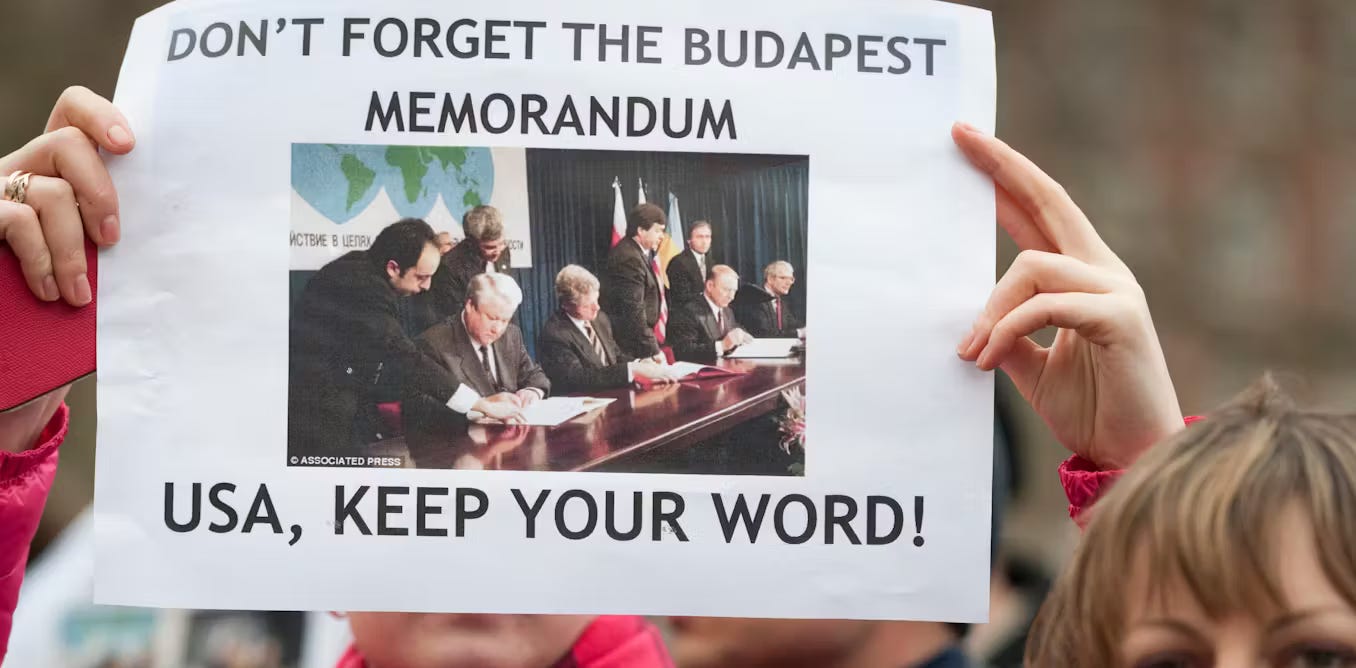
In late 1991, Ukraine regained its independence from the United Soviet Socialist Republics (USSR); with the reinstatement of its sovereignty, the country now possessed the world’s third-largest arsenal of nuclear warheads, intercontinental ballistic missiles (ICBMs), ICBM silos, and bombers.1
Justifiably, Ukraine refused to surrender its nuclear weapons systems without financial compensation for the highly-enriched uranium (HEU) in its territory; technical and financial assistance with the dismantling of nuclear-related infrastructure; and assurances of security assistance to protect its sovereignty and territorial integrity.2
By 1993, negotiations with Russia failed to produce an acceptable bilateral agreement; both countries entrusted the U.S. with facilitating a trilateral agreement that addressed Ukraine’s conditions for nuclear disarmament and nonproliferation.3 The Budapest Memorandum signed in 1994, provided security guarantees from the U.S., Russia, and Great Britain, to Ukraine, in exchange for relinquishing all nuclear weapons delivery and manufacturing systems to Russia to be dismantled.4
2. Russia’s 2014 invasion of Ukraine’s Crimean Peninsula
Twenty-years after having recognized, “Ukraine’s territorial integrity and inviolability of its borders, and to refrain from the use or threat of military force,” Russia invaded and annexed the Crimean Peninsula—on the orders of Russian President Vladimir Putin.5 There were clear signs that Putin would not stop after taking Crimea, as a Russian-led separatist movement in Eastern-Ukraine was also ongoing.6 Russia was now openly waging an extensive hybrid-warfare campaign in Ukraine.
In September, 2014, Ukraine’s president, Petro Poroshenko traveled to Washington, D.C. to address a joint session of Congress, to plead for lethal aid and argue that doing so could deter Moscow from pressing their offensive further into Ukraine.7 In his speech, Poroshenko thanked the U.S. for providing humanitarian aid, but his message was clear “we can’t win a war with blankets.”8
President Barack Obama, on our behalf, had announced a $53 million aid package to Ukraine that included ZERO lethal military assistance; instead we contributed helmets, body armor, and night-vision goggles.9 The largest, most powerful, and well-funded military and nation in the world—a force for freedom and democracy—refused to provide any lethal assets to support Ukraine in its self-defense, on the orders of the Commander-in-chief.10 Obama displayed weakness in the face of Russian aggression; his strategy of sanctions and statements-of-condemnation clearly failed to deter Putin; and likely emboldened him to continue pursuing the reunification of the former-USSR states by force in 2022.

3. Putin’s barbaric full-scale invasion
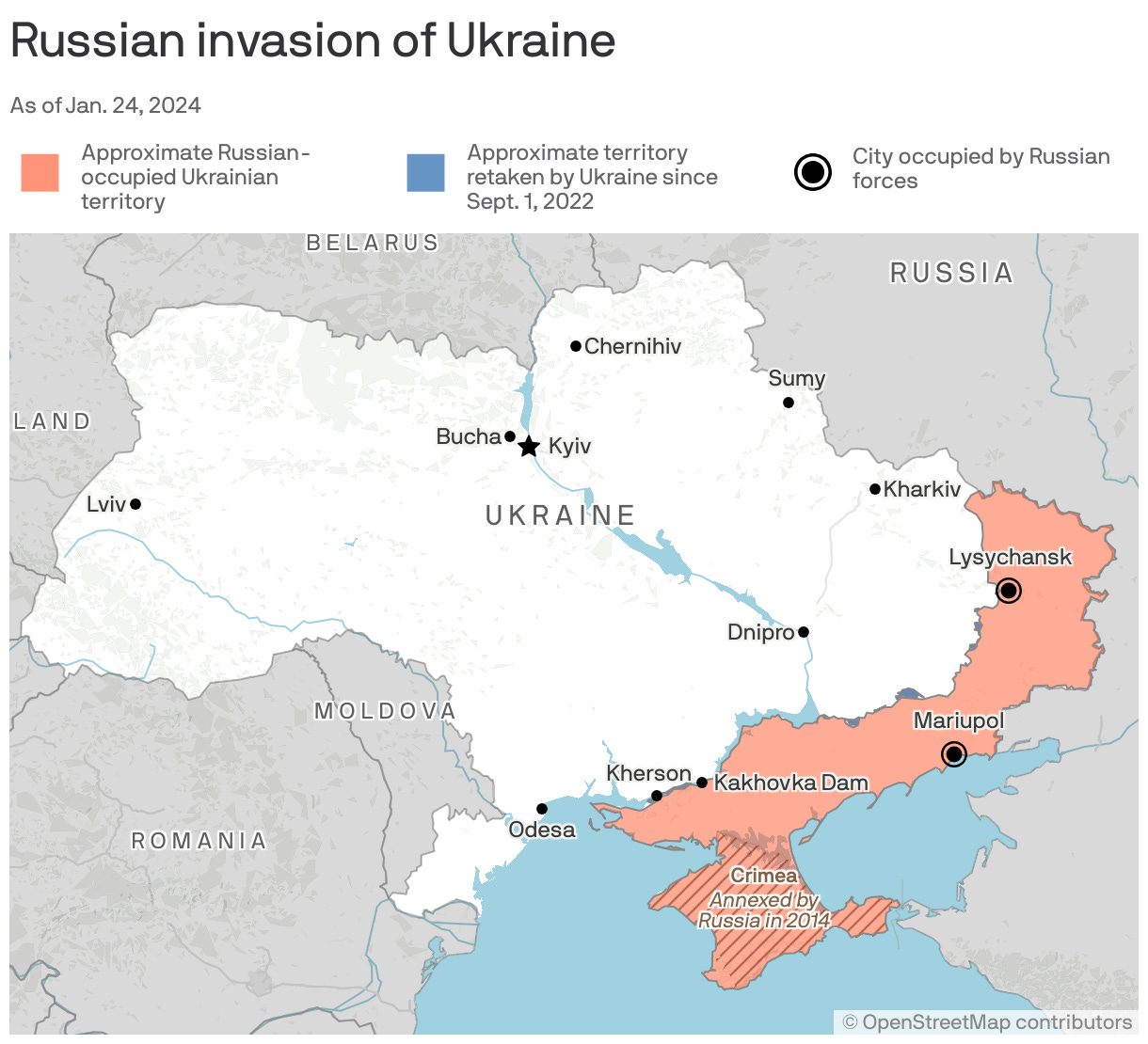
Since February, 2022, Russian forces have attempted to seize the entirety of Ukraine’s sovereign territory and redraw the country’s borders by force.11 Although, this war is about far more than a “border dispute”, like Putin allies in the Republican Party have asserted.
Evidence suggests that in persecuting their war, Russian forces have demonstrated blatant disregard for international humanitarian law.12 The alleged war crimes committed include: detaining and torturing civilians; targeting medical personnel and aid workers; using rape and sexual violence as a military tactic; forcibly abducting more than 16,000 children; targeting food storage, civilian water, gas, and electricity infrastructure.13
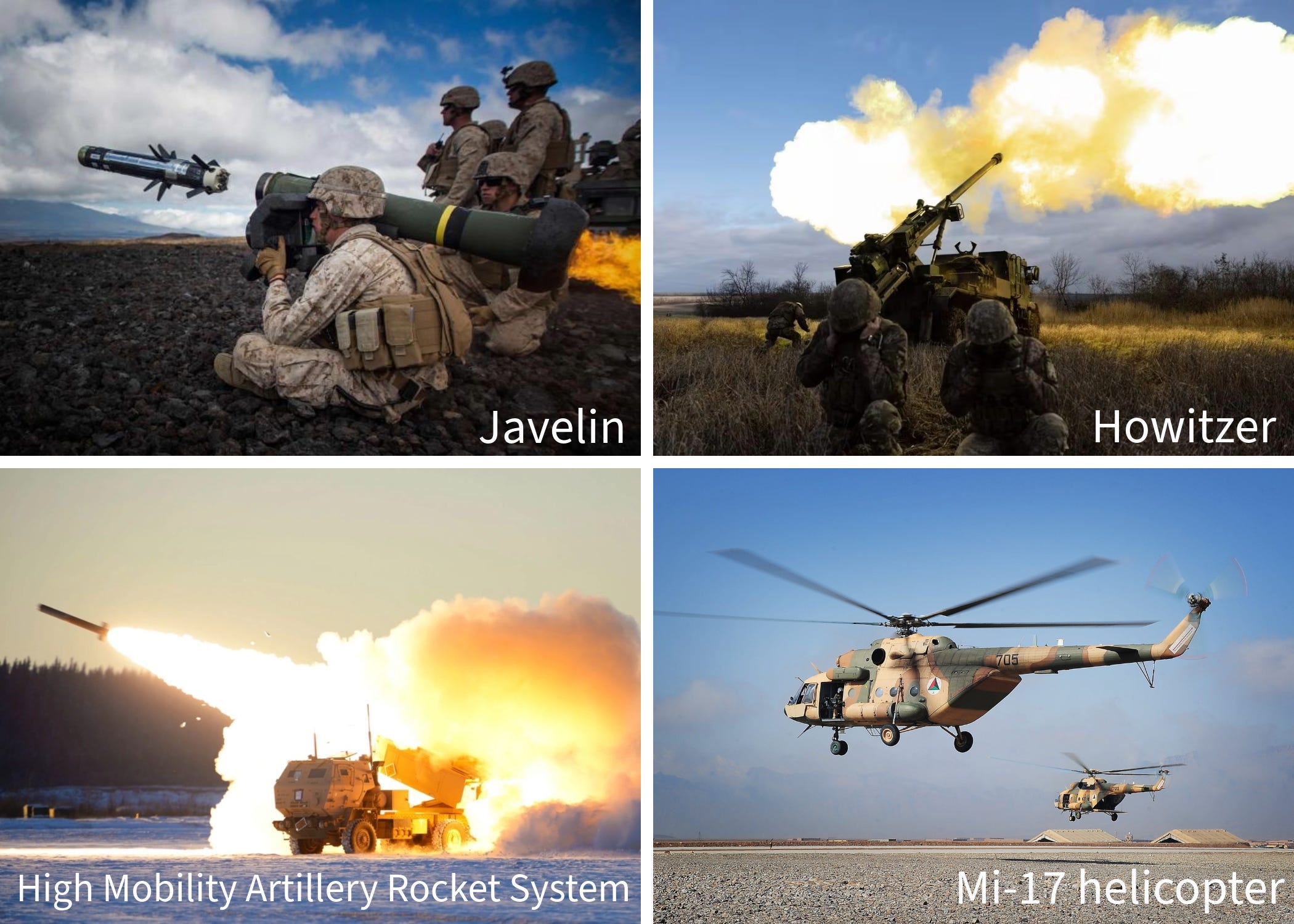
Ukrainians are not asking us to fight for them with boots on the ground; however, they do ask that we provide weapons from U.S. military stockpiles—because their lives and freedom depend on it. The U.S. has provided more than $44 Billion in military assistance since Russia’s invasion in 2022.14 This has come in the form of anti-tank missiles, mid- and long-range artillery, manned and unmanned aircraft, air defense systems, and much more.15 The military assistance funding appropriated by Congress, is spent in the U.S. on replenishing our stockpiles of non-excess defense articles that we provide to Ukraine; we are not providing a “blank check.”
A national security supplemental bill passed in the Senate to provide additional military firepower to Ukraine, and it is being held up by a group of Republicans in the U.S. House of Representatives. If the House passes the bill, reinforcements could begin arriving in Ukraine within hours of President Biden signing it into law.
If we—the United States of America— allow Putin to win, what message do we send to our allies and enemies around the world?