

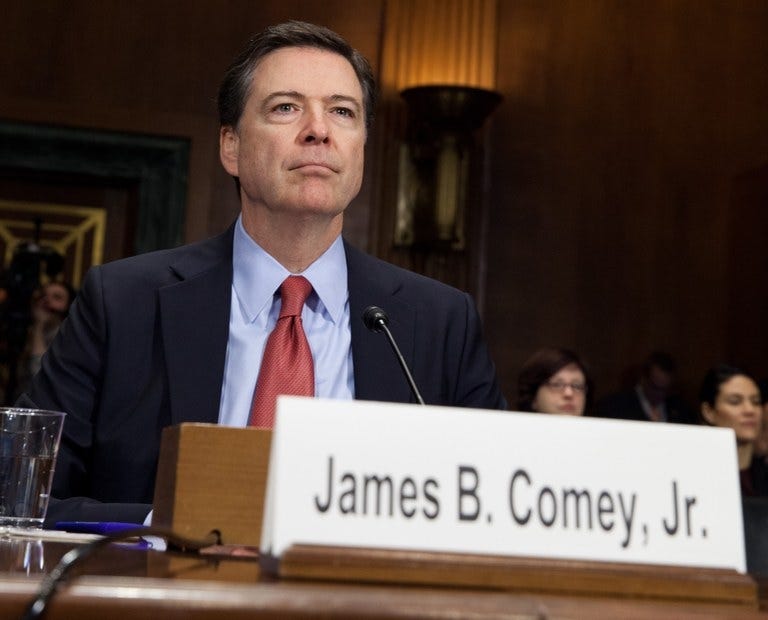
On Thursday, Sept. 25, former FBI Director James Comey was indicted by a federal grand jury on one count of making a false statement, and one count of obstruction of a congressional proceeding.
You probably remember Comey for the public role he played during the FBI’s investigation into Hillary Clinton’s use of a private email server while she was secretary of state — and later, for announcing the reopening of that investigation just 11 days before the presidential election, which Clinton went on to lose by less than 80,000 votes across three key swing states. The irony is impossible to ignore: Comey’s decision may have handed Trump the presidency, yet even that loyalty counted for nothing once Comey turned his attention to Russian interference.
Or, when Trump fired Comey shortly after taking office in 2017 — claiming it was due to his handling of the Clinton investigation — despite widespread consensus that the dismissal was tied to Comey’s investigation into potential criminal collusion between the Trump campaign and agents acting on behalf of the Russian Federation and Vladimir Putin.
As much as I disagree with Comey and many of the decisions he has made, this prosecution is Trump’s attempt at retribution. In fact, the U.S. attorney overseeing the Comey investigation resigned after Trump complained to reporters in the Oval Office that Virginia’s two Democratic senators voted for his confirmation.
However, according to reporting by the New York Times, just days before he resigned, the U.S. attorney had told his superiors at the DOJ the case against Comey was weak and not likely to result in charges.
This is not just about James Comey.
It’s about what can happen when a president uses the power of the state to punish his “enemies” and reward his allies.
In directing his DOJ to prosecute, Trump seeks to make an example out of Comey and deter future investigations that seek to hold those in power accountable. If this prosecution is allowed to stand, it sets a dangerous precedent: any president could weaponize the justice system to insulate themselves from oversight, effectively placing themselves above the law.
This is the behavior of strongmen and authoritarians: criminalize oversight, punish investigators, and rewrite history to cast the guilty as victims and the investigators as criminals. That is not democracy. That is authoritarianism, plain and simple.
If you believe in defending democratic institutions, share this post or leave a comment. Civic accountability begins with public awareness — and awareness starts with you.