

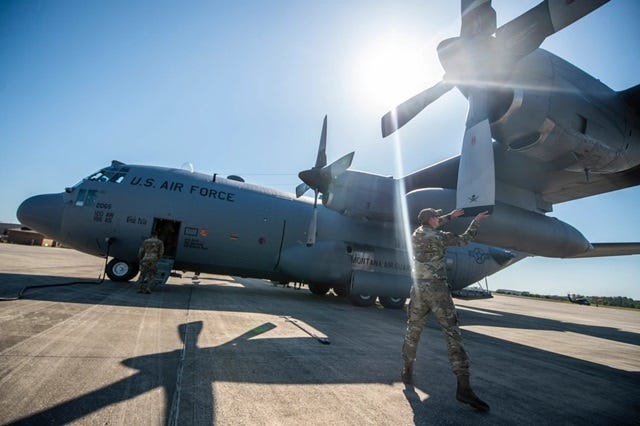
In the aftermath of Hurricane Helene, communities across the country face significant challenges as they begin to rebuild. In recent days, I have seen numerous posts on social media arguing that the United States should not provide another penny in aid to other countries until recovery efforts at home are completed. This is a false choice and reflects an isolationist view that harms our global standing as a force for good. It also fails to acknowledge the responsibility that comes with great power, influence, and the capacity to do good.
While it is essential to mobilize resources for disaster relief at home, it is equally crucial to recognize the value and importance of U.S. foreign aid. Even as we confront challenges within our own borders, the United States has the capacity and responsibility to invest in global stability. Foreign aid is not only a moral obligation; it is a strategic investment that benefits both our allies and our own national interests.
Foreign Aid: A Small Investment with a Big Impact
Foreign aid obligations account for just 1-2% of the total federal budget. This modest investment supports a wide range of critical programs, including humanitarian assistance, health initiatives, peace and security efforts, and economic development projects. These investments help stabilize vulnerable regions, prevent conflicts, and support the health and well-being of millions of people.
The impact of these programs may not always be visible to Americans in their daily lives, but their effects are profound and far-reaching. By providing support to countries in need, the U.S. helps build a more peaceful and prosperous world—one that ultimately benefits our own security, economy, and global standing.
The Strategic Importance of Foreign Aid
When the U.S. invests in foreign aid, it is investing in its own future. Economic development programs supported by U.S. aid foster growth and stability in regions that might otherwise become sources of conflict or instability. Health programs that combat diseases like HIV/AIDS, malaria, and COVID-19 save lives, strengthen healthcare systems, and prevent global pandemics from spreading to American shores. Humanitarian assistance responds to crises that, if left unchecked, could lead to mass migrations or regional conflicts.
By promoting stability and prosperity abroad, the U.S. helps to create conditions where peace and cooperation can thrive. These efforts reduce the need for costly military interventions, foster economic opportunities for American businesses, and enhance the security of our nation and its allies.
Simultaneous Domestic and Global Support: A Demonstration of U.S. Strength
Even as we focus on supporting communities affected by Hurricane Helene, we have the resources and capacity to maintain our commitments abroad. The United States has long demonstrated that it can address domestic needs while also fulfilling its global responsibilities. The ability to do both is a testament to our resilience and leadership.
Providing disaster relief at home and foreign aid abroad are not mutually exclusive. In fact, the dual approach reflects our strength as a nation capable of confronting multiple challenges at once. The same values that drive us to help our fellow Americans during times of crisis also inspire us to extend support to those suffering beyond our borders.
The Long-Term Benefits of Foreign Aid for Americans
While the impact of foreign aid may not be immediately visible in our day-to-day lives, its benefits are substantial. By supporting stability and development abroad, the U.S. mitigates threats before they reach our shores. Foreign aid programs build partnerships that enhance diplomatic ties, create new markets for American goods, and promote the rule of law and human rights—all of which contribute to a more stable, interconnected world.
Additionally, when the U.S. helps countries rebuild after conflicts or natural disasters, it strengthens its alliances and reinforces its reputation as a global leader. These partnerships can prove invaluable in times of crisis, both domestically and internationally.
Our Commitment to Global Stability
As we rebuild from Hurricane Helene, we must also reaffirm our commitment to international assistance. Supporting global stability through foreign aid programs ensures that the United States remains a force for good. The humanitarian assistance we provide saves lives; health initiatives combat diseases that could otherwise spread; and peace and security programs promote stability in regions that could otherwise fall into chaos.
It is crucial that we do not view our obligations abroad as separate from our responsibilities at home. The two are interconnected. By investing in global stability, the U.S. protects its own security, strengthens its economy, and upholds its values.
A Proud Legacy of Strength, Generosity, and Leadership
The United States has the extraordinary capacity to lift up communities at home while extending a hand of assistance to allies across the globe. Hurricane Helene is a reminder of our nation’s resilience and our commitment to stand by our fellow citizens in their time of need. But it is also a call to honor the values that have defined America for generations—compassion, generosity, and an unwavering commitment to the well-being of people everywhere.
Our foreign aid efforts are not just acts of charity; they are powerful expressions of our belief in a world where freedom, stability, and opportunity are shared by all. The American people have always risen to the challenge, showing that when disaster strikes, whether at home or abroad, we are there to help.
We should take pride in our role as a force for good on the world stage. By investing in global stability and prosperity, we are not only making the world a safer place—we are reinforcing what it means to be American. We are a nation that leads by example, and it is through this leadership that we strengthen our own future and that of generations to come. Together, let us remain steadfast in our commitment to being a beacon of hope, strength, and stability in an ever-changing world.