


In a recent conversation with a friend, we shared our frustration about the current state of the economy and the mental and emotional exhaustion it brings. Our discussion underscored the stark contrast between our understanding of wealth disparity and that of our grandparents. This difference in perception is largely due to the profound impact of social media and the internet on our awareness of economic inequality.
Our grandparents lived in an era where wealth inequality existed, but it was largely obscured from public view. Without the constant stream of information that defines our lives today, they might have heard stories of the rich and poor but were rarely confronted with stark visual evidence. For them, wealth disparity was an abstract concept, not a daily reality thrust into their consciousness.
The Digital Revolution and Wealth Awareness
Fast-forward to today, and we find ourselves in a vastly different environment. The internet and social media platforms have revolutionized the way we access information, bringing the realities of wealth inequality into sharp focus. The COVID-19 pandemic starkly highlighted wealth inequality, as Zoom meetings showcased disparities in living conditions, while TikTok videos exposed the contrasting lifestyles of the affluent and the struggling.
Every day, we are bombarded with images and stories that highlight the chasm between the wealthy and the poor. This constant exposure has heightened our awareness and often, our frustration. As working people struggle to survive on poverty-wages, it is understandable to feel financial resentment; not towards the wealthy individuals themselves, but rather the economic and political systems that have allowed us to reach such a point.
The Visibility of Extreme Wealth Inequality
Social media platforms like Instagram and Twitter showcase the lavish lifestyles of the ultra-rich, making the disparity glaringly obvious. Influencers flaunt luxury items and exotic vacations, while news outlets report on economic hardships faced by many. This contrast can be jarring and has made it impossible to ignore the growing divide. The visibility of extreme wealth inequality is further exacerbated by:
Influencer culture: The constant display of wealth and material possessions by social media influencers creates unrealistic expectations and highlights the stark contrast between the haves and have-nots.
News coverage: The 24-hour news cycle ensures that economic hardships and wealth disparities are consistently reported, making it difficult to ignore, and never offering practical solutions to improve conditions.
Social media algorithms: Algorithms that prioritize sensational and provocative content often amplify wealth disparities, making them seem more prevalent than they may be.
The Psychological Impact
Seeing wealth inequality all the time takes a toll on our mental health. It can make us feel:
Inadequacy: Constantly comparing ourselves to others' wealth and success can leave us feeling inadequate and with low self-esteem.
Frustration: Being aware of these disparities can lead to frustration and anger, especially when it feels like the system is rigged against us.
Hopelessness: The overwhelming scale of wealth inequality can cause feelings of hopelessness and despair, making us want to disengage from the issue altogether.
It's especially tough when we live in a country that promises anyone who works hard and follows the rules will be rewarded with economic and social mobility, only to find that reality doesn't always match this ideal.
Economic Conditions
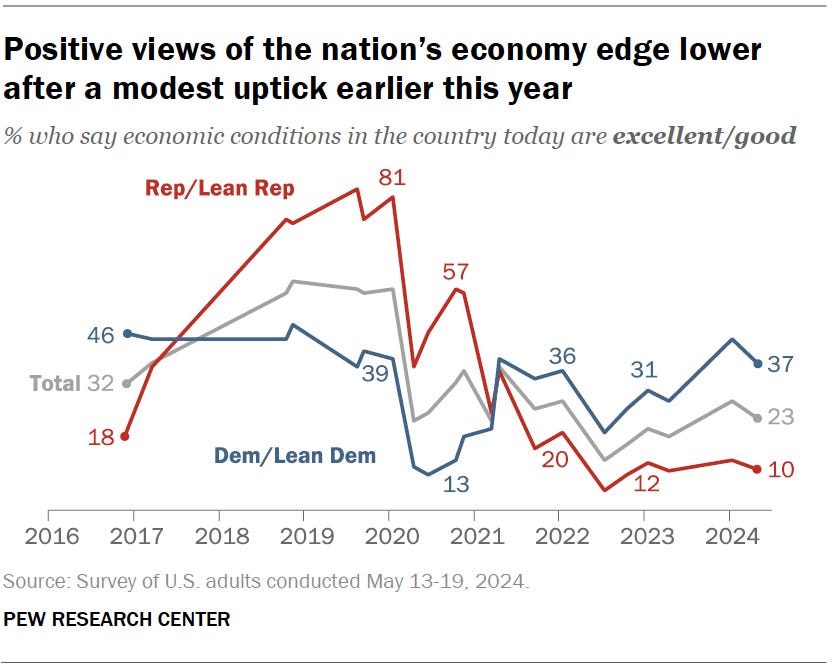
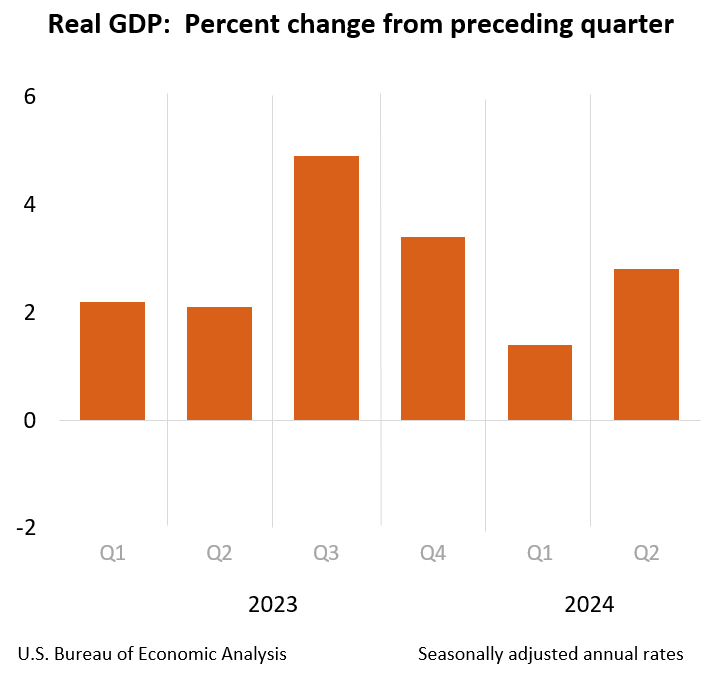
A Pew Research study conducted earlier this year revealed that less than 1 in 4 Americans feel the economy is excellent or good. This sentiment contrasts sharply with the continuing growth of the economy as reflected in the rising GDP. While economic indicators show progress, many Americans do not perceive these benefits, highlighting a disconnect between macroeconomic growth and individual financial well-being.
In the three decades after World War II, hourly compensation for most workers increased by 91%, nearly matching the 97% growth in productivity. However, since the 1970s, wages have significantly lagged behind productivity. From 1973 to 2013, while productivity rose 74%, the hourly pay for typical workers only increased by 9%.
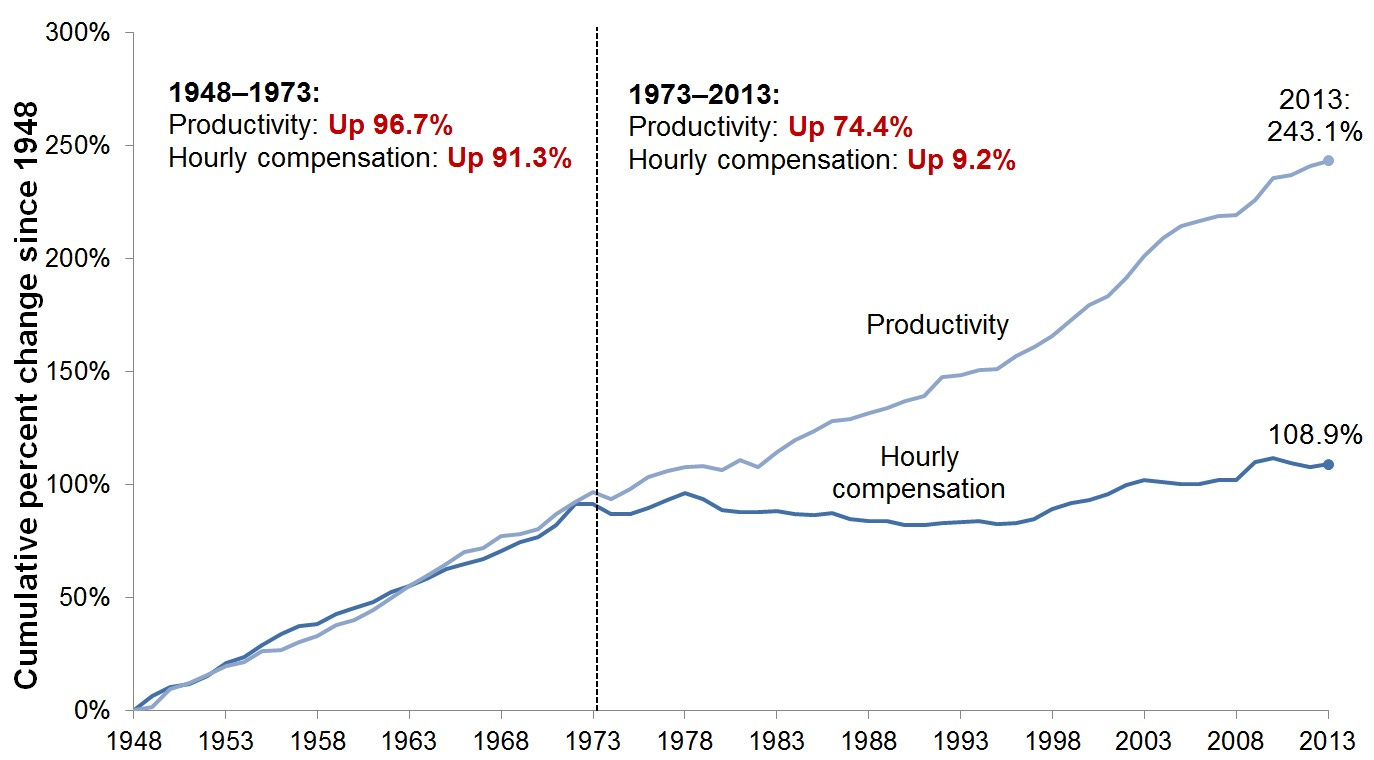
In the last decade, this gap has become painfully clear, affecting everyone from college grads to those without degrees, and hitting both blue-collar and white-collar workers. Essentially, people are working harder and producing more, but their paychecks and benefits aren't keeping up.
Driving Change
However, this heightened awareness also presents an opportunity. By being constantly informed, we have the power to drive change. We can:
Advocate for policies: Support policies that address economic disparity, such as progressive taxation, affordable education, modernizing social welfare programs, and making it easier for workers to form unions and collective bargaining agreements.
Support initiatives: Engage with initiatives like The Economic Policy Institute, Center for American Progress, and Urban Institute, that promote reforms to improve working conditions, increase hourly wages, and expand access to the American Dream for all.
Vote for leaders: Elect leaders who prioritize reducing wealth and income disparities. By voting for candidates who support policies that enhance workers' rights and dignity, we can ensure that economic growth benefits everyone, not just the wealthy few. Your vote can help create a fairer economy where hard work is rewarded and all workers are treated with respect and dignity.
Our conversation reminded me of the importance of perspective. While our grandparents may have lived in ignorance of the full extent of wealth inequality, we have the advantage of awareness. It is up to us to use this awareness to foster understanding, compassion, and action. By acknowledging the role of the digital age in shaping our perceptions, we can better navigate the complexities of wealth inequality and work towards a more equitable future.
With the knowledge and tools at our disposal, we have the power to advocate for meaningful change. By supporting policies that improve workers' rights and dignity, engaging with initiatives that promote economic reform, and voting for leaders committed to reducing disparities, we can help create a fairer and more just society. The path to progress is within our reach; it's up to us to take the first step.