

On Easter Sunday, the President of the United States took to Truth Social to post an expletive-laden ultimatum: “Open the F—in’ Strait, you crazy b—––, or you’ll be living in Hell – JUST WATCH! Praise be to Allah.” He signed it: President DONALD J. TRUMP.
Set aside the indignity of that sentence for a moment and consider what it reveals. The most powerful military on earth, led by a man who promised to project strength and command respect, has been reduced to posting profane social media threats at a country it claims to have already “decimated.” That is not strength. It is what it looks like when a negotiator runs out of credible options. And it is the foreseeable result of a foreign policy built almost entirely on hard power, with no real soft power behind it.
The Strait of Hormuz is the lesson. We should learn it.
What’s Actually Happening
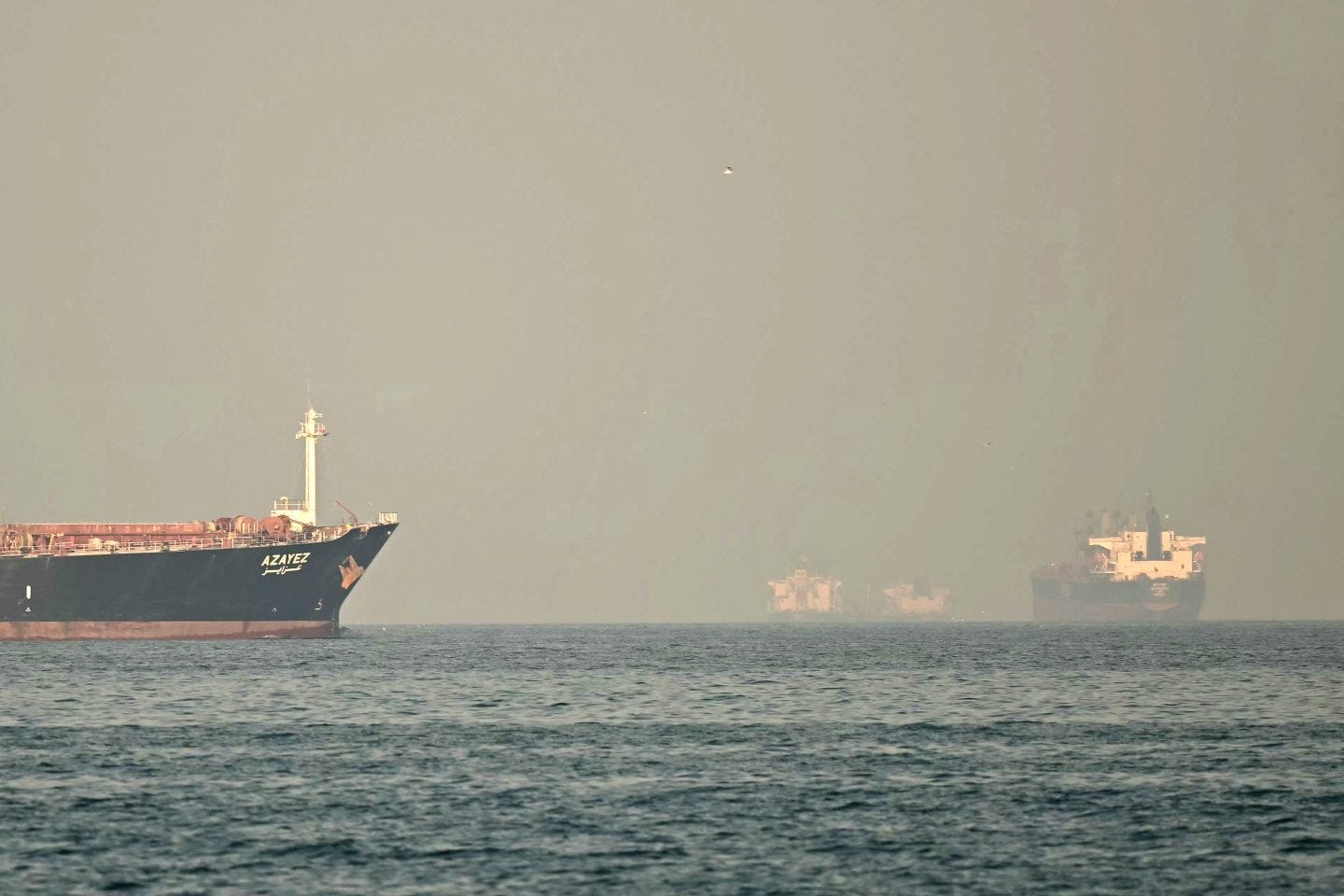
Iran has effectively shut down the Strait of Hormuz — the route through which roughly 20% of the world’s oil passes — by striking ships in response to U.S.-Israeli attacks that began on February 28.
Since then, Trump has issued a rolling series of deadlines, ultimatums, and threats. On March 21, he threatened to “obliterate” Iran’s power plants if the strait was not fully reopened within 48 hours. Two days later, he backed off, citing “very good and productive conversations” with Iranian authorities. He then pushed the deadline to April 6. As of this weekend, that deadline is expiring with no significant progress to show for it.
Iran’s central military command responded to Trump’s latest ultimatum by calling it “a helpless, nervous, unbalanced and stupid action.”
That is not the language of a country that feels meaningfully coerced. Iran has not capitulated. It is using the disruption to press its own conditions — reparations, a new legal framework for transit through the strait, and the inclusion of Lebanon in any ceasefire deal — while showing little sign of yielding under threat. Trump, meanwhile, keeps resetting his own deadlines. The credibility gap grows every time he does.
The Hard Power Trap
Political scientists have long distinguished between hard power — military force, sanctions, coercive threats — and soft power, the ability to attract, persuade, and build voluntary cooperation through legitimacy, values, and relationships. Joseph Nye, who coined the term, was clear: durable influence requires both. A country that relies only on hard power does not project strength. It projects brittleness.
Trump has spent his entire political career misunderstanding that distinction. He seems to believe that threatening to bomb power plants and bridges is the same thing as having real leverage. It is not. Real leverage requires that the other side believes you will follow through, that compliance is less costly than defiance, and that allies and institutions stand behind you in a way that gives your threats weight.
On all three counts, Trump has weakened his own hand.
Iran has not yielded. Every extended deadline signals to Tehran — and to every other adversary watching — that American ultimatums have a shelf life, and that shelf life can be outlasted. That is a lesson others will absorb too.
The Economic Damage Hiding in Plain Sight
Trump’s supporters will remember that he campaigned relentlessly on bringing prices down. He promised cheaper gas, lower inflation, and economic relief. Republicans assured voters that his “dealmaking” instincts would keep the United States out of foreign entanglements. The result has been the opposite.
U.S. gasoline prices have surged above $4 per gallon for the first time in more than three years, driven by the oil shock from the war. They are now more than 30% higher than they were before the U.S. and Israel attacked Iran in late February. The International Energy Agency has described the disruption as the “largest supply disruption in the history of the global oil market,” with flows through the Strait collapsing from roughly 20 million barrels per day to a trickle.
This has delivered a new shock to a U.S. economy that was already dealing with tariffs, stubborn inflation, and weakening employment. Analysts say prices have nowhere to go but up as long as the Strait remains disrupted, and that the president does not have many good options left.
None of this was unforeseeable. Economists, energy analysts, and foreign policy experts warned that starting a war in the Persian Gulf without a plan to keep the Strait open was an act of strategic malpractice. The information was public. The risks were documented. They were debated openly. And now we are living with the consequences.
The Petrodollar’s Accelerating Erosion
The long-term damage goes well beyond gas prices. Since 1974, the United States has benefited enormously from the petrodollar system — the arrangement in which Saudi Arabia agreed to price oil in dollars and recycle surpluses into U.S. assets in exchange for American security guarantees, including protection of free navigation through the Strait of Hormuz. That system helped underwrite decades of American borrowing at unusually favorable rates.
The Iran conflict is straining that arrangement in ways analysts are now openly discussing. Deutsche Bank warned that the conflict “could be remembered as a key catalyst for erosion in petrodollar dominance, and the beginnings of the petroyuan.” Analysts increasingly see the U.S. failure to secure the Gulf as a challenge to the premise on which the petrodollar system rested: that American power would safeguard the infrastructure and maritime routes underpinning the global oil trade.
Trump shows little sign of grasping the implications. At an April 1 press conference, he said: “You know, we don’t use the strait. We don’t need it. Europe needs it. Korea, Japan, China, a lot of other people. So they’ll have to get involved a little bit on that.”
That framing is more consequential than it sounds. Whether it accelerates dedollarization or ends up as another passing provocation will depend heavily on how this conflict ends. But this is moving in the wrong direction, and the president either does not understand that or does not care.
NATO: An Alliance Under Unusual Strain
Nowhere is the soft-power deficit more consequential than in America’s relationships with its allies.
Trump launched this war with little visible allied backing, then demanded that allied navies help reopen the Strait of Hormuz. When they declined — having no legal obligation to join a conflict they were not party to — he called them cowards. He then fumed at NATO allies for denying U.S. logistical support and access to airspace and military bases, and threatened to withdraw from the alliance.
Spain announced that its military bases and airspace would be off-limits to U.S. warplanes. Italy denied American aircraft landing rights at Sigonella. Germany ruled out direct participation, with its defense minister stating plainly: “This is not our war, we have not started it.”
As former U.S. ambassador to NATO Ivo Daalder put it: “Military alliances are at their core based on trust — the confidence that if I am attacked, you will come help defend. It’s hard to see how any European country will now be able and willing to trust the United States to come to its defense.”
Trump has introduced a level of allied distrust that would have been almost unthinkable just a few years ago. And while NATO comes under strain, Russia benefits. Higher oil prices hand Moscow an obvious windfall, while alliance tensions pull Western attention away from the very threats NATO was built to deter.
The Warnings Were Available
Foreign policy failures are not just presidential failures. In a democracy, they are downstream of political choices made by millions of citizens.
There is a version of this essay that extends more sympathy to voters who were genuinely uncertain in November 2024 — who weighed competing concerns, took the economic message at face value, and made the best judgment they could with the information they had. I understand that version. I just do not think it is the most accurate one.
The warnings about Trump’s approach to foreign policy were public, repeated, and available to anyone willing to take them seriously. Economists flagged the inflation risks of his tariff agenda. Foreign policy professionals warned that his transactional view of alliances would erode the trust that makes them work. Military and intelligence analysts raised concerns about unilateral action in the Middle East and the dangers of entering a conflict without an exit strategy.
These were not fringe warnings. They were consensus views in the relevant expert communities. They were published in accessible outlets. They were widely reported.
Dismissing them required motivated reasoning — a prior commitment to the conclusion that Trump was right and the establishment was lying. That is a choice, and choices have consequences. The gas prices Americans are paying right now are partly a consequence of that choice. The strain on NATO is partly a consequence of that choice. The erosion of the petrodollar architecture is partly a consequence of that choice.
You cannot build durable global influence on threats alone. You cannot coerce adversaries while alienating allies. You cannot walk away from the security architecture that underpins your own financial dominance and call it strength. Power without legitimacy, trust, or partners who believe your word is not real strength. It is just noise.
Iran understands that. Our allies understand it too. The question is when the rest of us will.
Aden’s Analysis is a newsletter about politics, public policy, and democratic strategy — for readers who believe persuasion still matters.
Subscribe to get every piece delivered to your inbox.