

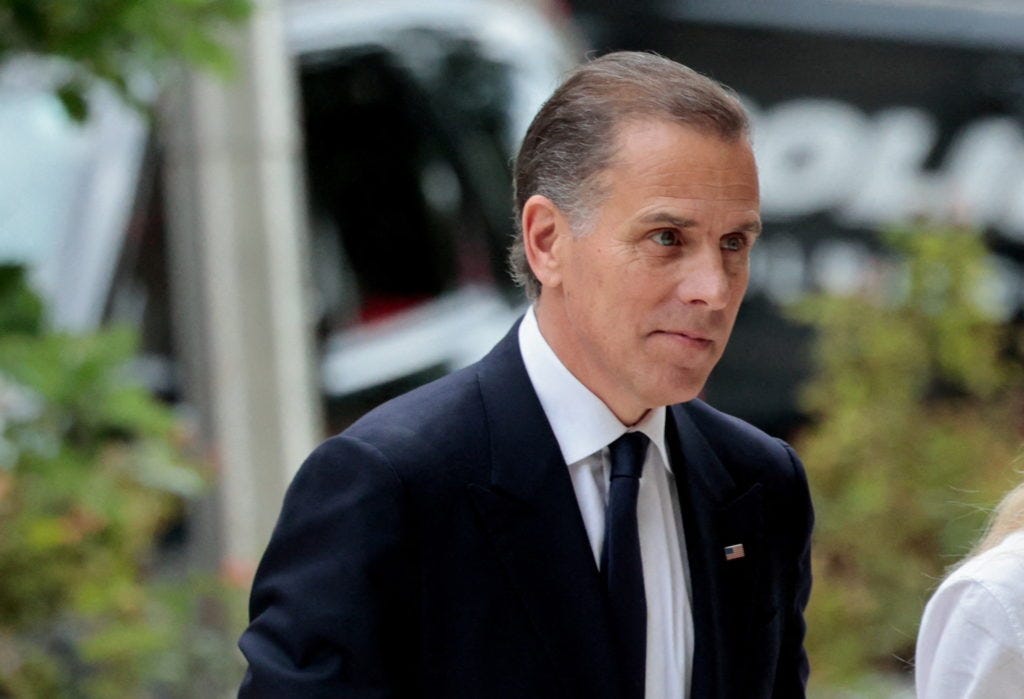
Yesterday, President Joe Biden granted a presidential pardon to his son, Hunter Biden. This decision comes after years of selective prosecution and politicized attacks. Hunter Biden was set to face sentencing for a federal gun charge this week, related to his 2018 misrepresentation on a firearm form during a period of addiction. While such cases rarely result in prosecution unless linked to violent crimes or trafficking, Hunter became the focal point of intensified scrutiny, driven by Republican allegations of corruption within the Biden family.
Republicans have leveraged Hunter Biden's legal troubles and overseas business dealings to suggest broader misconduct by the President. However, despite an impeachment inquiry, House Republicans have failed to produce evidence linking President Biden to any wrongdoing. These relentless attacks nevertheless heightened the stakes surrounding Hunter’s case.
A plea deal that would have resolved Hunter’s gun and tax charges collapsed amid judicial scrutiny and GOP criticism. Allegations from IRS whistleblowers and accusations of leniency led U.S. Attorney David Weiss to be elevated to special counsel. Weiss pursued more severe charges in California, including claims that Hunter failed to pay substantial taxes over several years. Yet, it’s not uncommon for U.S. Attorneys to decline prosecution for unpaid taxes if the individual agrees to repay them along with penalties — which Hunter had already agreed to do. It is difficult to avoid the conclusion that Hunter Biden's last name made his case an exception.
Read his full statement here:
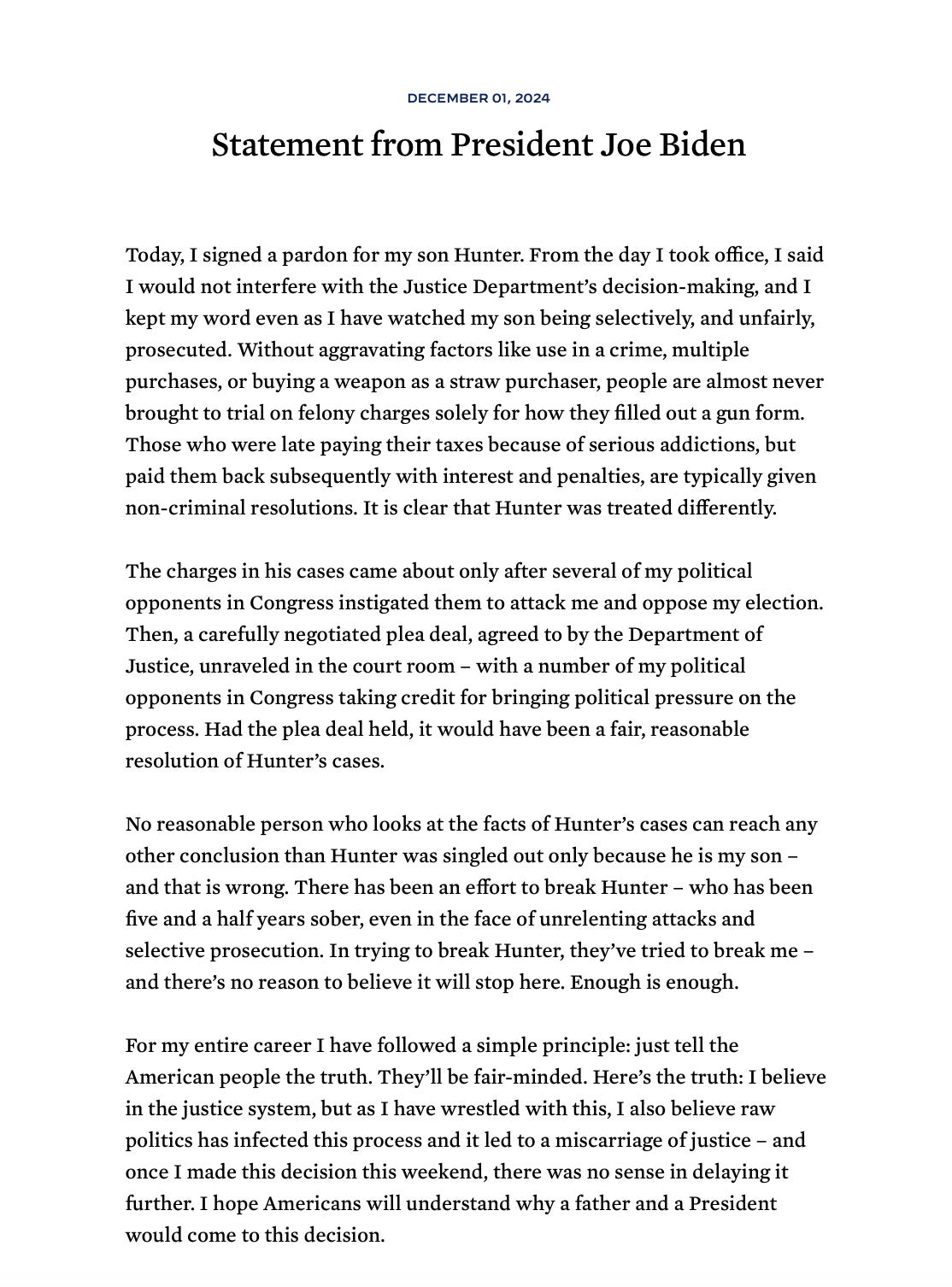
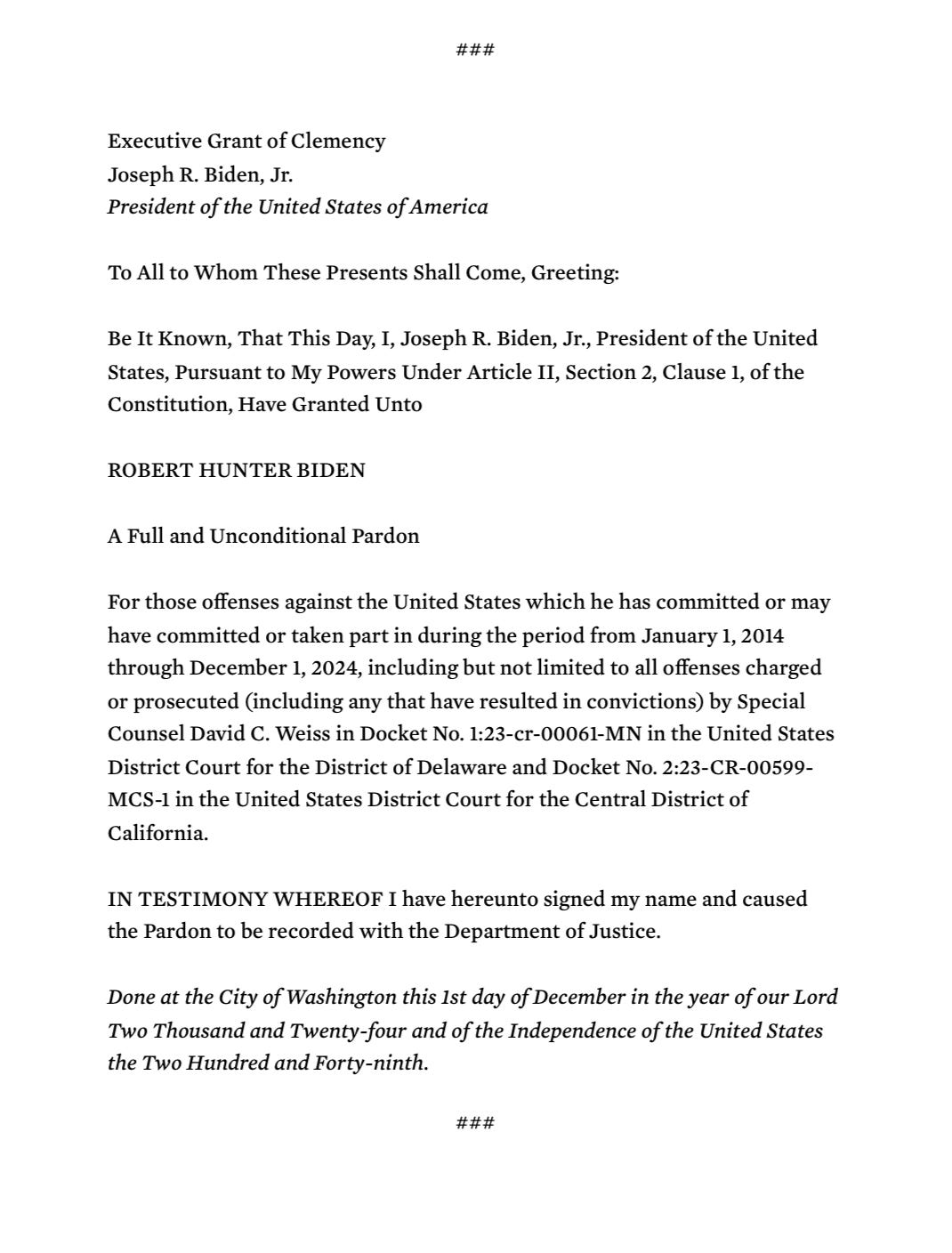
By granting a pardon, President Biden protects his son from further politicized legal challenges and addresses concerns about Hunter's safety. With the possibility of a Trump administration returning in 2025, Hunter could have faced heightened risks in federal custody. This act of clemency underscores President Biden's commitment to shielding his family from partisan warfare while prioritizing justice and fairness.
Regardless of personal opinions about the presidential pardon power, it is worth noting that Article II, Section 2, Clause 1 of the Constitution explicitly grants the President the authority to issue pardons for federal offenses, except in cases of impeachment. This constitutional prerogative allows the President to act in extraordinary circumstances where justice demands intervention.
In this instance, President Biden’s decision exemplifies both familial loyalty and the broader principle that justice should not be weaponized for political gain.
I have great admiration and respect for him for making this decision.