

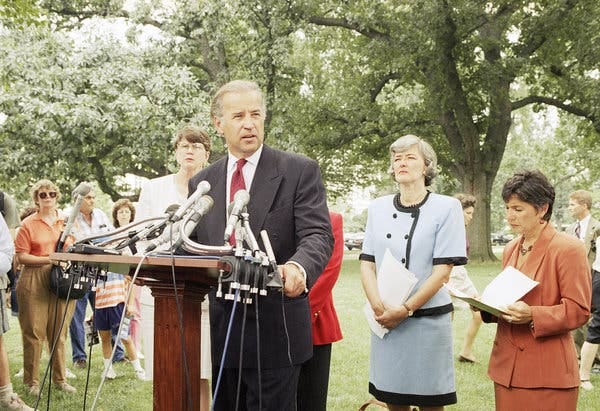
Introduced by then-Senator Joe Biden in 1990, the Violence Against Women Act (VAWA) was signed into law by President Bill Clinton—nearly 30 years ago—on September 13, 1994, marking a significant milestone in American legislative history.
Senator Biden’s commitment to combating domestic violence was evident from the outset. Recognizing the urgent need for a comprehensive approach to address the pervasive issue of violence against women, Biden championed VAWA as part of his broader efforts to enhance public safety and support vulnerable populations. The legislation was groundbreaking in its scope, providing federal resources to improve the investigation and prosecution of violent crimes against women and establishing critical support services for survivors.
The passage of VAWA brought about several key changes:
1. Federal Coordination and Funding: VAWA established the Office on Violence Against Women within the Department of Justice, ensuring dedicated oversight and coordination of federal efforts to combat domestic violence, sexual assault, and stalking. The Act also allocated substantial funding for victim services, including shelters, hotlines, and legal assistance.
2. Legal Protections and Enforcement: The Act introduced measures to strengthen the legal response to violence against women. This included enhanced penalties for repeat federal sex offenders, mandatory restitution to victims, and improved enforcement of protection orders across state lines.
3. Support for Marginalized Communities: VAWA recognized the unique challenges faced by immigrant women, LGBTQ+ individuals, and other marginalized groups. Provisions were included to provide these communities with tailored support and legal protections, ensuring that VAWA’s benefits were inclusive and far-reaching.
VAWA has been reauthorized multiple times, each iteration expanding its provisions and enhancing its effectiveness. These reauthorizations have introduced innovations such as the National Domestic Violence Hotline, increased funding for rape crisis centers, and new programs aimed at preventing violence and supporting survivors in underserved communities.
The 2022 reauthorization of VAWA further strengthened this landmark law by:
- Reauthorizing all current VAWA grant programs until 2027 and, in many cases, increasing authorization levels.
- Expanding special criminal jurisdiction of Tribal courts to cover non-Native perpetrators of sexual assault, child abuse, stalking, sex trafficking, and assaults on tribal law enforcement officers on tribal lands.
- Increasing services and support for survivors from underserved and marginalized communities, including LGBTQ+ survivors.
- Establishing a federal civil cause of action for individuals whose intimate visual images are disclosed without their consent and creating a new National Resource Center on Cybercrimes Against Individuals.
- Improving prevention and response to sexual violence, including increased support for the Rape Prevention and Education Program and the Sexual Assault Services Program.
- Strengthening evidence-based practices by law enforcement in responding to gender-based violence.
- Improving the healthcare system’s response to domestic violence and sexual assault through enhanced training for sexual assault forensic examiners.
- Updating programs to reduce dating violence, help children exposed to domestic violence, and engage men in preventing violence.
- Enacting the National Instant Criminal Background Check System (NICS) Denial Notification Act to help state law enforcement investigate and prosecute cases against individuals legally prohibited from purchasing firearms.
Over the past few years, the Biden Administration has taken significant steps to prevent and respond to gender-based violence at home and abroad, including:
- Increasing funding for domestic violence and sexual assault services through the American Rescue Plan, providing $1 billion in supplemental funding.
- Reforming the military justice system to address sexual assault, harassment, and related crimes.
- Signing the Ending Forced Arbitration of Sexual Assault and Sexual Harassment Act of 2021.
- Directing action to protect students from campus sexual assault.
- Increasing resources for survivors of crime, including gender-based violence, through amendments to the Victims of Crime Act (VOCA).
- Leading multinational efforts to address online harassment and abuse.
- Prioritizing the crisis of Missing or Murdered Indigenous People, including gender-based violence.
- Strengthening regional leadership on violence against Indigenous women and girls.
On International Women’s Day in 2021, President Biden signed an Executive Order creating the White House Gender Policy Council and calling for the development of the first-ever government-wide National Action Plan to End Gender-Based Violence. These strategies provide a roadmap for a whole-of-government effort to end gender-based violence, ensuring survivors are supported and all people can live free from abuse.
Joe Biden’s advocacy for VAWA did not end with its initial passage. As Vice President, he continued to champion the Act, leading initiatives to address campus sexual assault and working to ensure that VAWA’s protections kept pace with evolving needs. His unwavering support underscores the ongoing importance of federal leadership in the fight against domestic violence.
The Violence Against Women Act stands as a testament to the power of committed advocacy and the importance of legislative action in addressing societal issues. As we continue to push for stronger protections and support for all survivors, VAWA remains a cornerstone of our national efforts to combat violence against women.