

According to leaks from Democratic Party insiders, Joe Biden is said to be considering dropping out of the presidential race, amid growing pressure from current- and former-elected officials and major donors. This comes after 22 Congressional Democrats have now publicly called on Biden to do so. None of these individuals have cited a policy or performance issue, but rather expressed concerns with Biden’s poor prospects of winning in November; and his ability to serve another four-year term, following his catastrophic debate performance in late June.
Current Political Landscape
It is expected that Biden is seriously reconsidering his options after meeting with longtime allies to hear their concerns, given that his closest advisors are evidently not telling him the grim truth about his chances of winning.
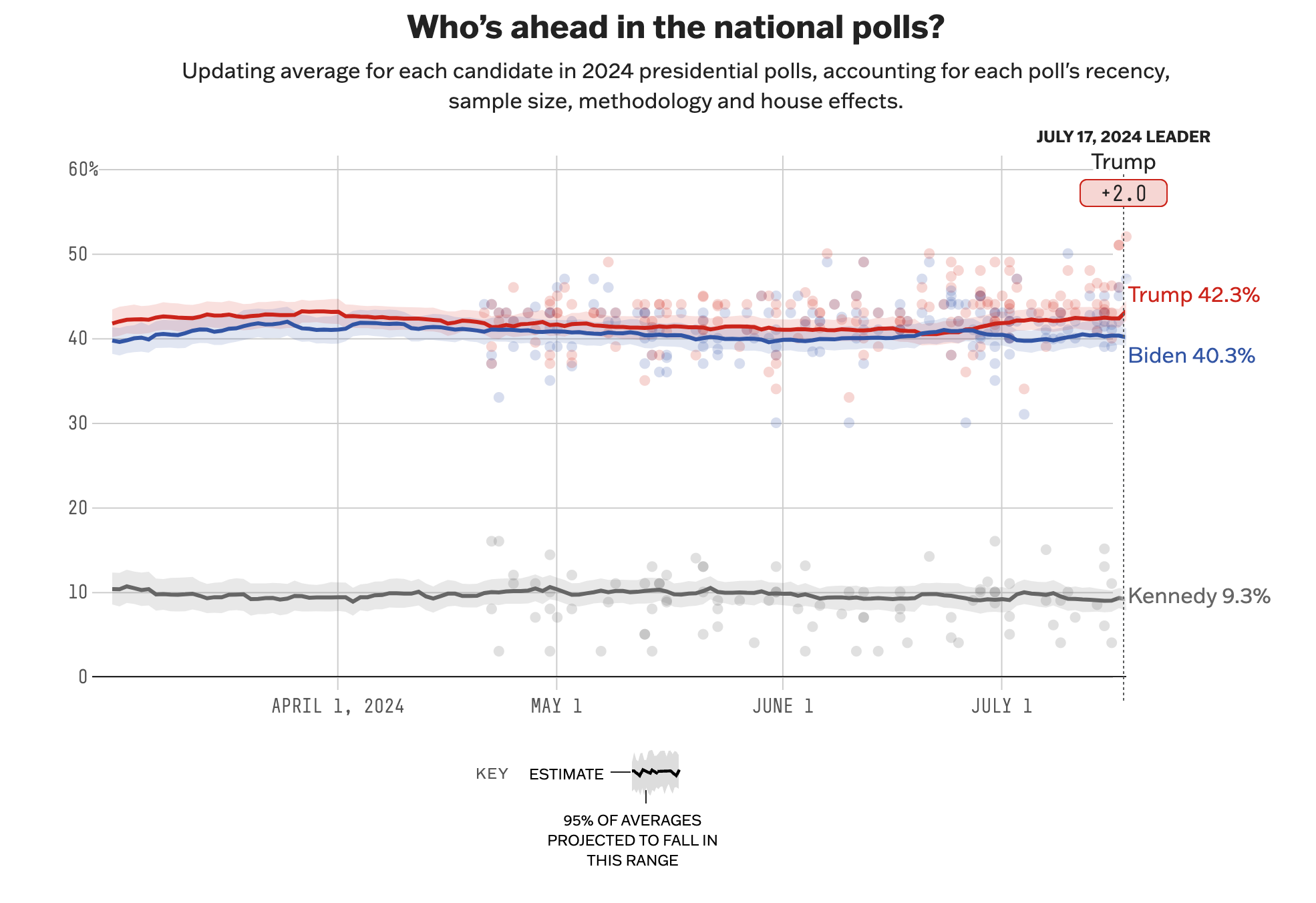
At this time, Donald Trump is current ahead in the presidential race by two-points, nationally. This is within the margin of error, however, given that we elect a president on a state-by-state basis—Democrats need to win by a considerable margin in the popular vote in order to secure an electoral victory.
Biden and his surrogates have argued that the polls have largely remained constant and the race remains tied; but that is the exact point of concern for Democrats calling for Biden to drop out. If there is not a change in public sentiment, the probability of another Trump administration is growing.
Republicans are afraid that if Trump is forced to run against any other Democrat, his campaign strategy and chances of winning will face a serious uphill battle.
President Biden’s record and the Democratic Party’s policy platform remains incredibly popular. This is demonstrated in the data showing Democratic Senate and House candidates polling ahead of their Republican opponents, but Biden losing to Trump in the same jurisdictions.
The Delegate Dilemma
One of the most significant challenges in this scenario is the question of delegates. Biden has accumulated a majority of delegates from the primary race. If he were to drop out, the process of releasing these delegates to vote for another candidate would be complex and unprecedented in modern politics. It would require careful negotiation and strategic planning to ensure a smooth transition and to avoid fracturing the party.
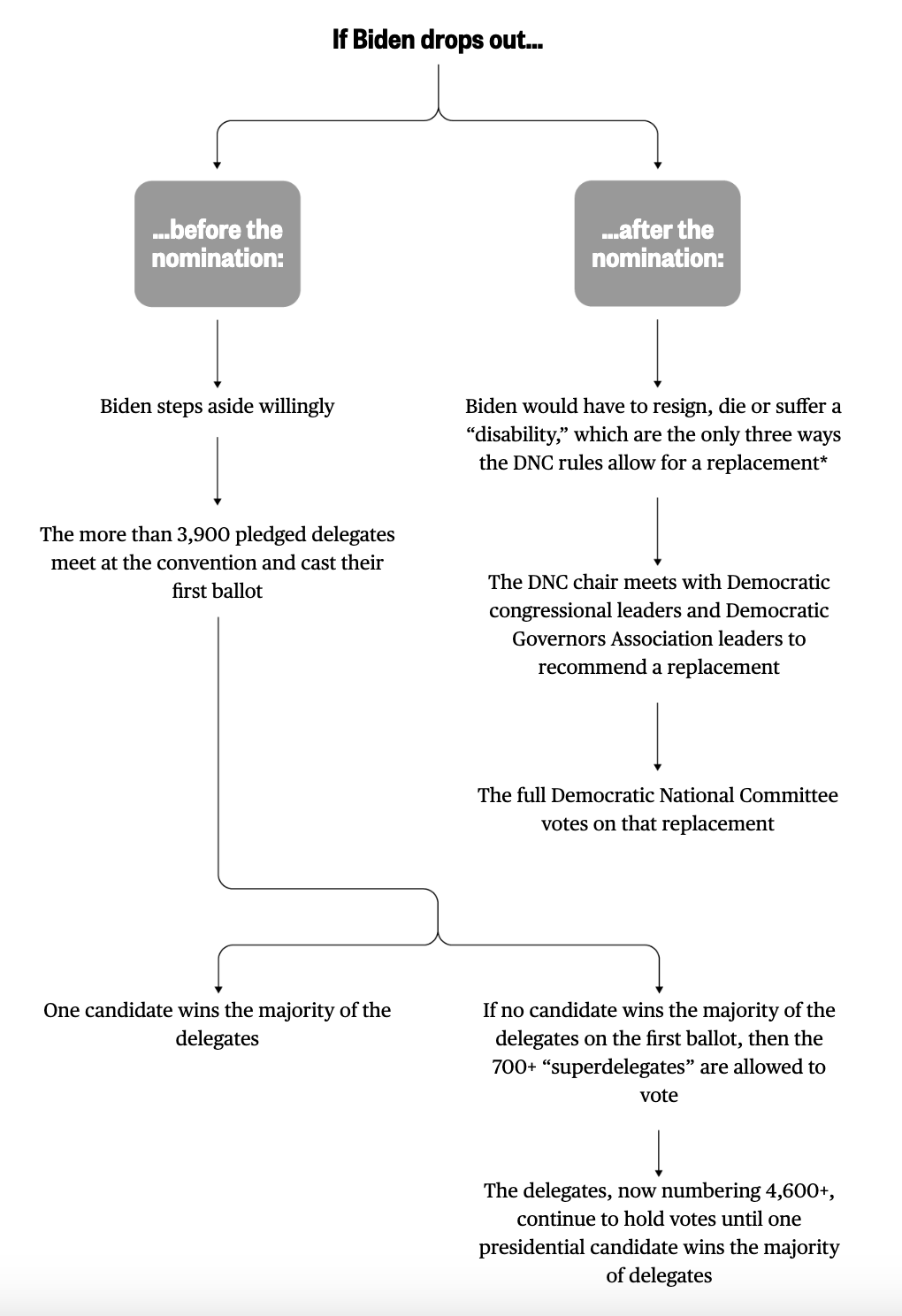
Releasing the delegates could open the door for a heated primary battle, as various factions within the Democratic Party vie for control. Potential candidates, such as Vice President Kamala Harris, Transportation Secretary Pete Buttigieg, and Governor Gavin Newsom, could step into the spotlight, each offering their vision for the future of the party, and country.
Many commentators have expressed strong opposition to any candidate other than Vice President Kamala Harris, citing her race and sex as the primary reason for nominating her. But delegates should not allow this to deter them from choosing the most qualified candidate with the best prospects of winning.
The most important quality for the delegates to look for in the eventual nominee is their ability to communicate a clear message to voters and make the case for themselves. This is a serious weakness for Harris, as she has shown her inability to communicate clearly, when she is not reading from a teleprompter.
If you don’t believe me, watch the videos below.
Looking Ahead
If Biden decides to step aside, it will be a historic move, demonstrating a willingness to prioritize the party's success over personal ambition. However, if he chooses to stay in the race, he will need to address the concerns head-on, proving to the American people that he is still the right person for the job.
In this time of uncertainty, one thing is clear: the Democratic Party must come together to present a united front, regardless of who the candidate may be. The stakes are high, and the future of the nation depends on their ability to navigate this challenging political landscape.
A new candidate could inject fresh ideas, renewed enthusiasm, and a dynamic approach to campaigning, appealing to a broader coalition of voters. This shift could invigorate the Democratic base, attract undecided voters, and present a stark contrast to the Republican nominee. With the right nominee, the Democratic Party can capitalize on the popularity of their policy platform and showcase a vision for the future that resonates with the American people. Ultimately, this could be the decisive factor in securing a win in November and shaping a prosperous future for the nation.