

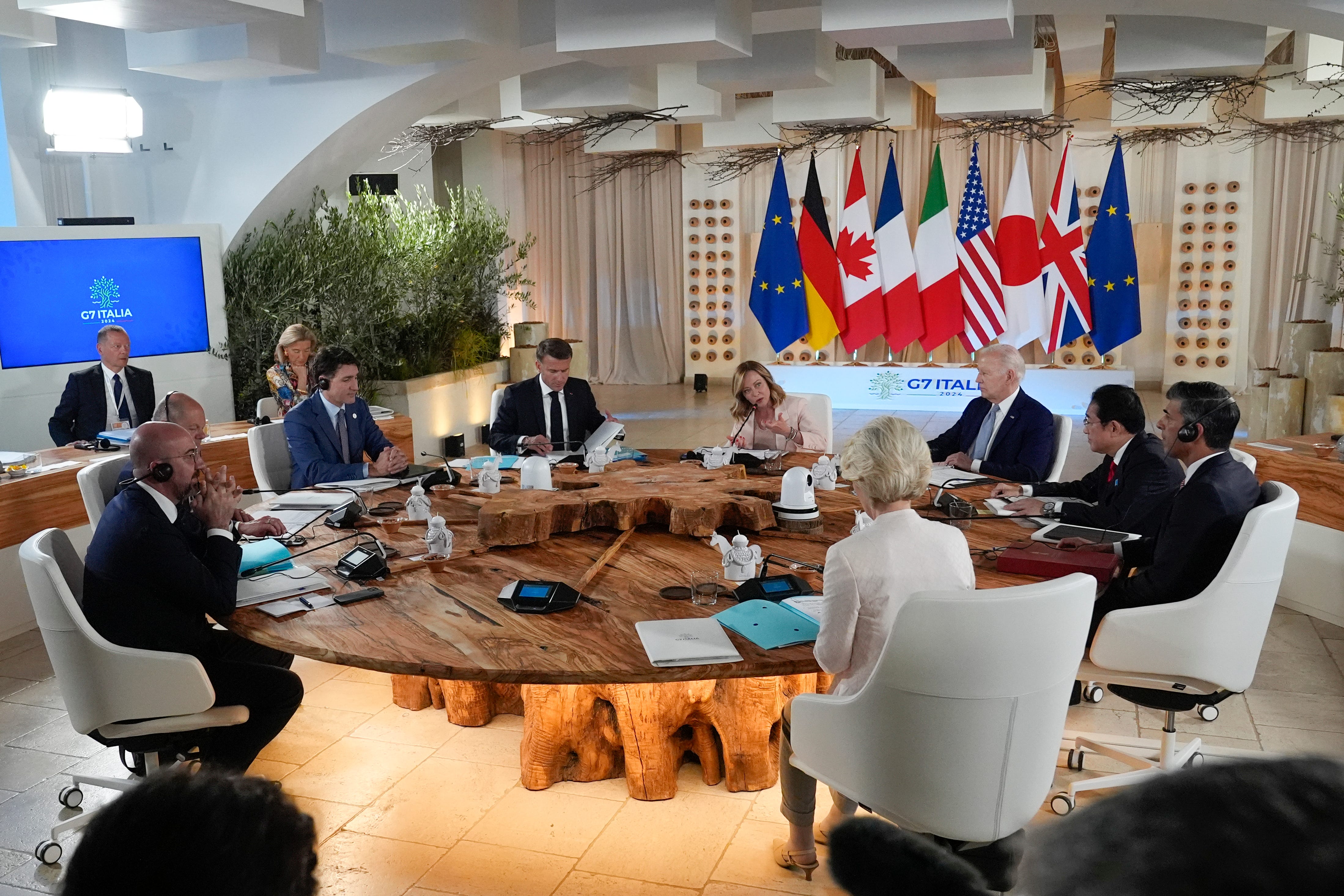
Ukraine’s allies have agreed to move forward with a $50 billion loan to Kyiv, financed by profits from frozen Russian assets in Europe and the U.S., the leaders of the Group of Seven (G7) countries announced today. This agreement marks a significant achievement for President Biden, with the U.S. spearheading the effort to get the broad grouping of Ukraine’s supporters to agree on seizing Russian assets to support Kyiv and counter Russian President Vladimir Putin.
G7 members froze about $280 billion in Russian assets after the invasion began in February 2022. The proposal would use the interest generated on these frozen assets, estimated at about $2.6 billion to $3.6 billion a year, to pay back the $50 billion loan provided to Ukraine immediately.” The president’s National Security Adviser Jake Sullivan, and Secretary of State, Antony Blinken, have been working behind the scenes to negotiate with other European countries that have been hesitant to agree to take this aggressive move.
The commitment from G7 countries comes as Russia’s more than two-year illegal war against Ukraine is straining unity among Kyiv’s military and financial backers. This has translated into battlefield losses for Ukraine without adequate military resupplies, although Ukraine was able to largely push back Russia’s latest offensive around the city of Kharkiv.
Countries supporting Ukraine are under pressure to lay the groundwork for long-term commitments amid shifting domestic political trends. There’s concern among Ukraine and its supporters that former President Trump, the presumptive Republican presidential nominee, would pull back U.S. commitments for Kyiv or NATO, potentially benefiting Putin.
And while far-right parties demonstrated a strong showing in European Union parliamentary elections, analysts say there’s not a major threat to European support for Kyiv in the short-term. In particular, they point to Italian Prime Minister Giorgia Meloni, the G7 host who, despite being described as right-wing, has come out as a strong supporter for Ukraine and critic of Russia. Her party demonstrated a strong return in the EU elections.
The agreement to use profits from frozen Russian assets is an important stopgap measure amid ongoing debates and disagreements over whether the frozen assets should be seized entirely. So far, each country is working out its own legal justifications for such a move. In April, Biden signed into law the REPO Act, part of the national security supplemental package, which allows the U.S. to seize frozen Russian assets for Ukraine’s reconstruction.
Russia’s Naval Maneuvers: A Show of Force Amidst Decline
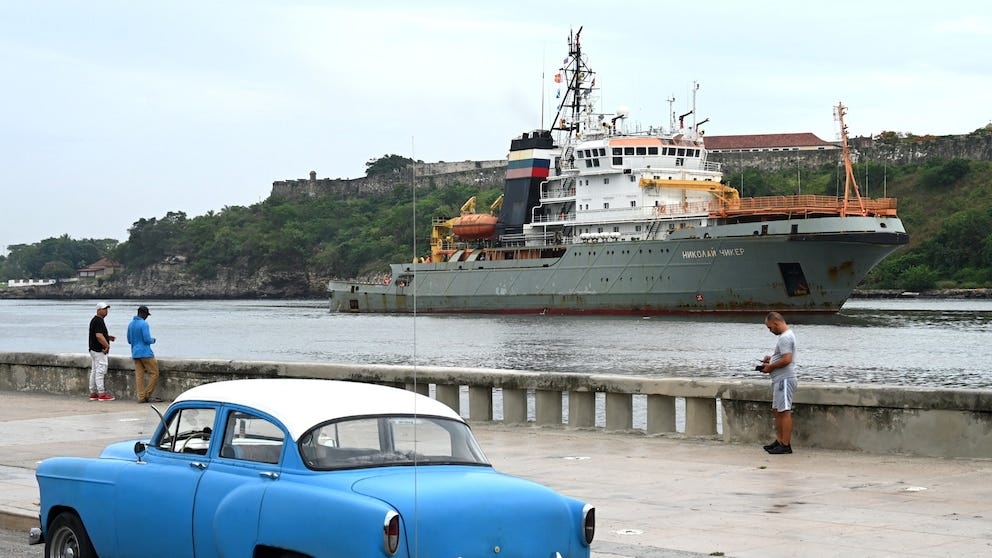
In a related development, Russia’s recent deployment of a submarine and navy ships to Cuba has raised eyebrows but should not cause alarm among Americans. This move by Putin is largely symbolic, aimed at showcasing military capabilities amidst a backdrop of significant losses and degraded military equipment.
The presence of Russian naval assets in the Caribbean is a reminder of Cold War-era tactics, yet it reflects more on Russia’s attempts to project power than on actual military strength. The ongoing conflict in Ukraine has severely strained Russia’s military resources, and this latest maneuver appears to be more about optics than operational readiness.
Why Americans Should Stay Calm
While the sight of Russian military vessels near U.S. shores might evoke concern, it’s crucial to understand the broader context. Putin’s actions are indicative of a leader trying to assert dominance and distract from the realities of Russia’s weakened military and economy. The U.S. military remains vigilant and prepared, ensuring that our national security is not compromised.
Additionally, the global community, including our G7 partners, stands united in opposing Russian aggression and supporting Ukraine. This solidarity further diminishes the potential threat posed by Russia’s symbolic gestures.
President Biden’s successful negotiation at the G7 Summit and the subsequent $50 billion loan program underscore his adept leadership on the global stage. Meanwhile, Russia’s naval posturing near Cuba should be seen for what it is: an attempt to project power in the face of significant internal challenges.
Americans can take confidence in our nation’s strong alliances and our leadership’s ability to navigate complex geopolitical landscapes. As always, vigilance and informed understanding are our best defenses against unwarranted fears.