

A recent video posted on TikTok has ignited a heated debate over an issue that seems mundane at first glance: whether or not you always return your shopping cart to the store or cart corral. While this debate might appear trivial, it has brought to light deeper discussions about societal expectations, personal responsibility, and moral judgments.
In the video, the creator explains that she doesn’t return her cart when shopping with her kids for safety reasons. Parking lots can be extremely dangerous, and cart corrals are not always conveniently located—a responsibility of the establishment. Despite this, some argue that returning your shopping cart is a test of one’s character, suggesting that those who don’t are somehow morally deficient. This notion has garnered both support and criticism, highlighting the polarized views on what it means to fulfill one’s civic duties in everyday life.
A Simple Act with Complex Implications
On one hand, proponents of always returning the cart argue that it’s a simple act of consideration. It helps keep parking lots orderly, prevents damage to cars, and makes life easier for store employees. This perspective suggests that small acts of kindness and responsibility contribute to a more functional and respectful community.
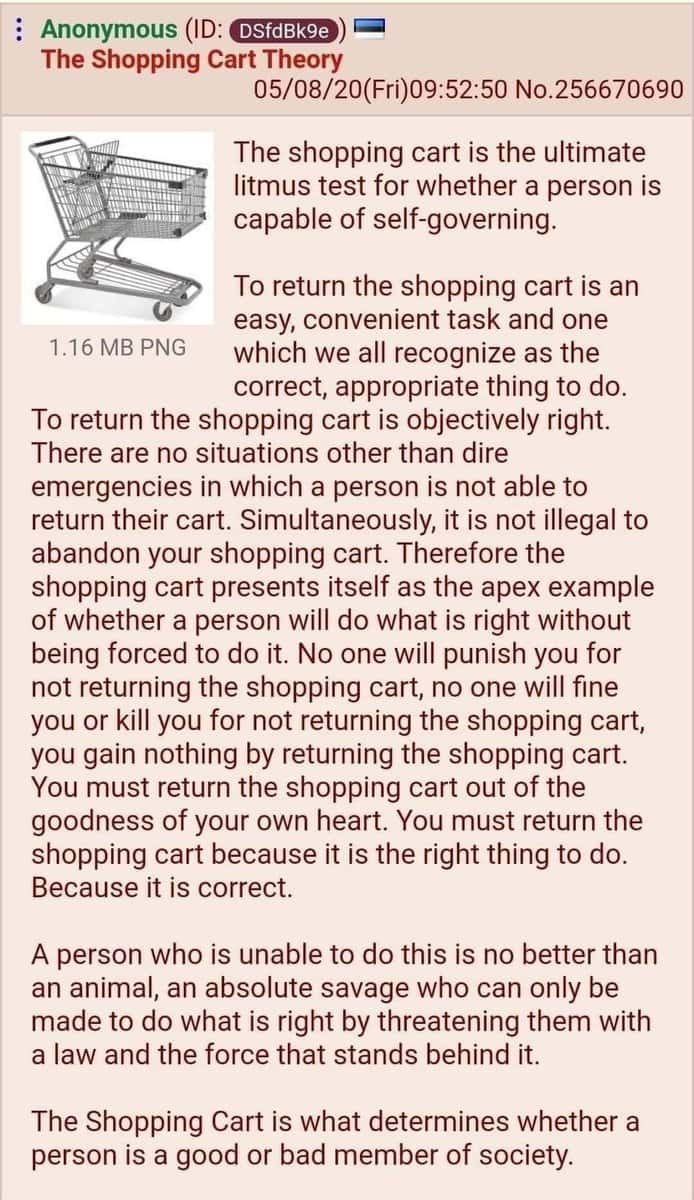
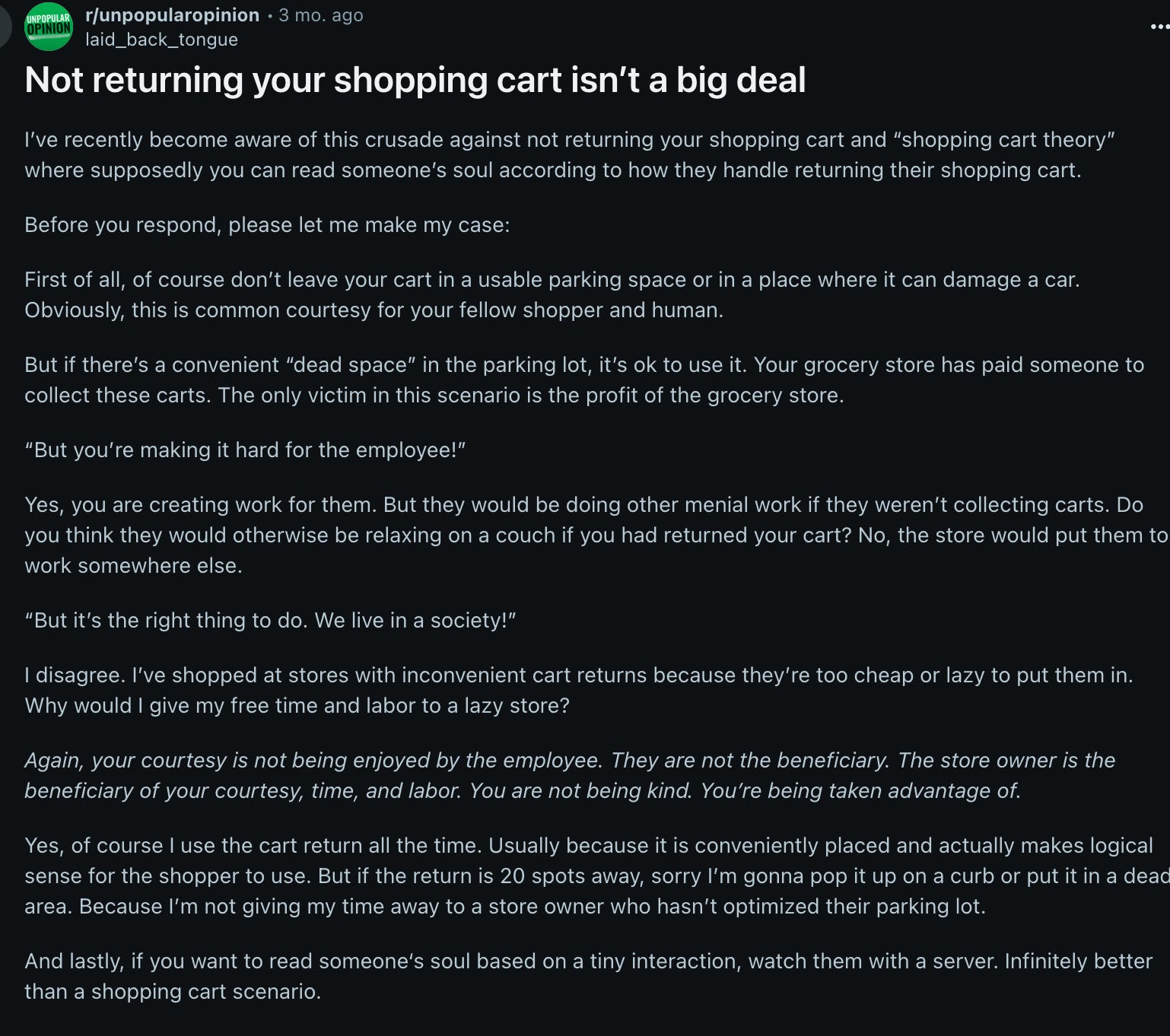
However, the opposing viewpoint challenges the idea that returning a cart is an appropriate measure of one’s morality. Critics argue that there are numerous reasons why someone might not return their cart, including safety concerns when shopping with children and the lack of conveniently located cart corrals. They contend that making sweeping judgments based on this single action oversimplifies human behavior and fails to account for individual circumstances.
The Dangers of Simplistic Judgments
The broader issue at play is the tendency to use everyday behaviors as moral litmus tests. When we assign moral value to actions like returning a shopping cart, we risk reducing complex human beings to their most mundane behaviors. This can lead to unfair character assessments and deepen societal divisions.
Moreover, this debate reflects a growing culture of public shaming, where individuals are quick to judge and condemn others based on limited information. In an era where social media amplifies every opinion, it’s crucial to remember that not every action—or inaction—reflects a person’s overall character or worth.
Encouraging Consideration without Condemnation
While it’s beneficial to encourage considerate behavior, it’s equally important to approach such issues with empathy and understanding. Returning a cart does not give you moral high ground, nor does it fulfill one’s civic duties. It’s more important to be actively engaged in public issues, helping your neighbor, and volunteering in your community.
Additionally, the inconvenience of carts in the parking lot is not such that it requires much more effort for the individual paid to retrieve carts. If it were a serious enough issue, retailers could change their policies. Instead of using the shopping cart debate as a moral battleground, we should focus on fostering a culture where acts of kindness and responsibility are encouraged without being weaponized as tools of judgment.
The TikTok debate over returning shopping carts may seem trivial, but it underscores significant societal issues. Let’s strive to promote positive behaviors through empathy and understanding, rather than through judgment and condemnation. By doing so, we can create a community that values kindness and responsibility without turning everyday actions into moral litmus tests.