


In today's edition of Aden's America, we delve into a significant development from the Federal Trade Commission (FTC) that will reshape the employment landscape.
Increasingly, employers require new hires to sign employment contracts as a condition of employment, many of which contain a non-compete clause that restrict employees from taking a better job or starting their own business.
The FTC has concluded that non-compete agreements stifle competition in an unfair manner, and violate section 5 of the Federal Trade Commission Act, that prohibits the use of "unfair or deceptive acts or practices in or affecting commerce.”
The FTC has issued a final rule that invalidates nearly ALL noncompete clauses!
This landmark decision aims to enhance worker freedom, promote fair competition, and stimulate economic growth by removing the restrictive barriers they impose.
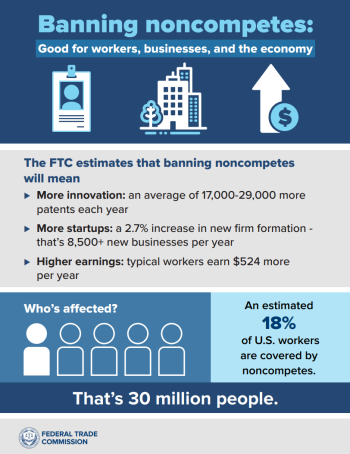
Noncompetes have long restricted job mobility and career advancement for workers, trapping them in a low-paying position or preventing them from starting a business. These clauses keep wages low and allow employers to take all bargaining power away from their employees.
And by trapping talented employees in their positions, we all suffer the consequences of untapped innovation and entrepreneurship.
You might be wondering how the FTC is able to create this rule without Congress passing legislation specifically prohibiting noncompetes; the answer is that Congress already gave the FTC the power to prevent “unfair methods of competition.”
However, it’s important to note that the FTC Act passed in 1914; so why create this rule now? The use of non-compete clauses has increased exponentially within the last few decades. It has risen to the level that requires intervention on behalf of employees.
The final rule is set to go into effect on September 04, 2024. This change promises to create a more dynamic and fair labor market, with substantial benefits for both workers and businesses. By removing these restrictive barriers, we can look forward to a future where worker freedom is enhanced, competition is fair, and economic growth is stimulated.
If you are interested in the details of this action, check out this video from More Perfect Union here or read the full text of the FTC rule here.