

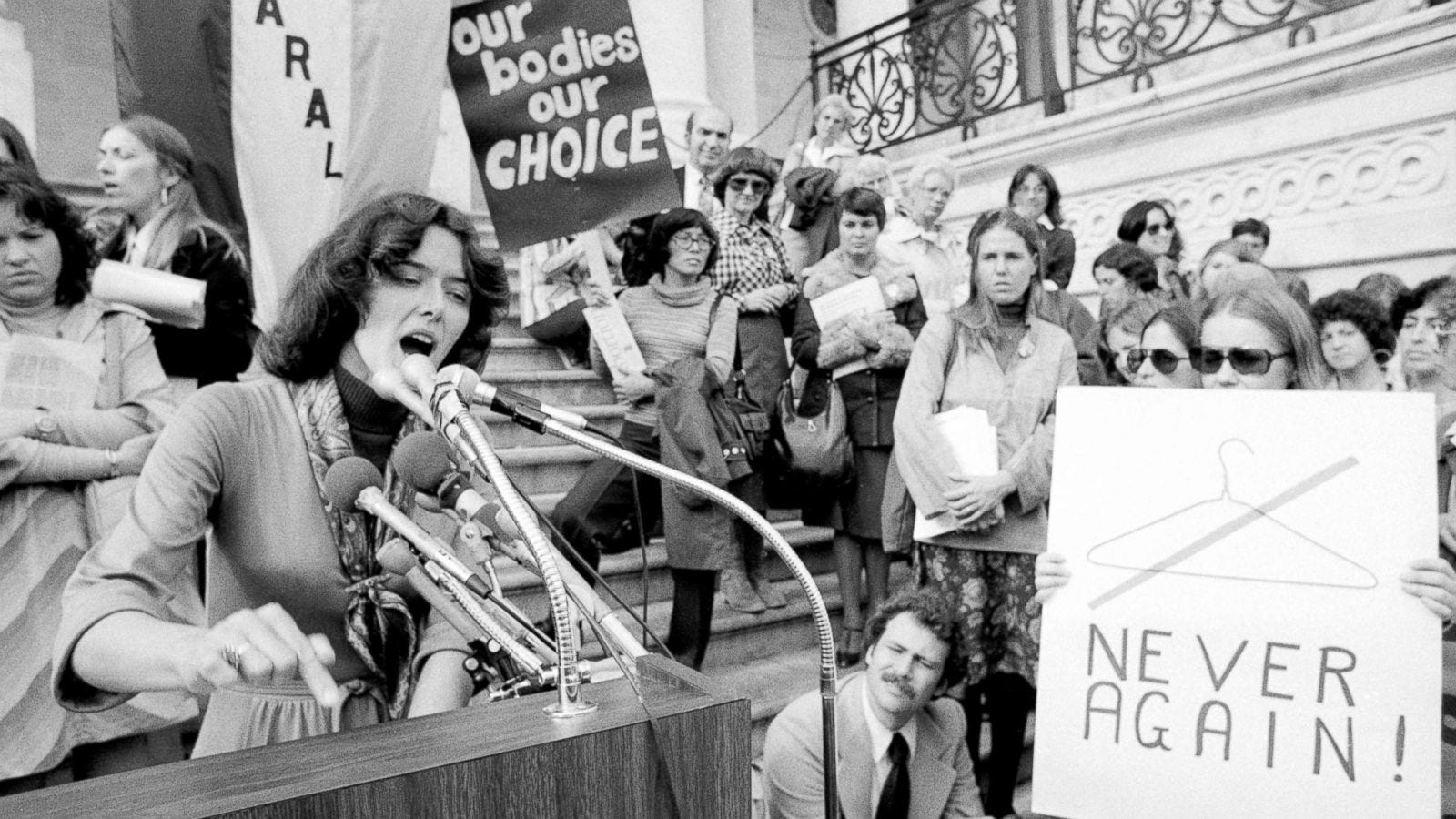
Today marks the second anniversary of the Supreme Court's decision in Dobbs v. Jackson Women's Health Organization, which overturned the landmark case Roe v. Wade. For nearly half a century, Roe v. Wade had protected the right to receive an abortion under the Fourteenth Amendment, establishing a critical precedent in American jurisprudence. This newsletter aims to provide a comprehensive analysis of the impact of the Dobbs decision, its implications for American society, and the ongoing struggle for reproductive rights.
Historical Context
Roe v. Wade: A Landmark Decision
Roe v. Wade, decided in 1973, was a groundbreaking Supreme Court case that recognized a woman's constitutional right to privacy, which included the right to choose to have an abortion. This decision was rooted in the Fourteenth Amendment's concept of personal liberty and restrictions on state action. It provided women with the autonomy to make deeply personal medical decisions without excessive government interference.
Stare Decisis: Upholding Judicial Consistency
The legal principle of stare decisis, meaning "to stand by things decided," is fundamental to the U.S. legal system. It ensures consistency, stability, and predictability in the law by adhering to precedents set by previous court decisions. Roe v. Wade, as a longstanding precedent, was a cornerstone of reproductive rights in the United States. Its overturning not only removed these protections but also questioned the reliability of the Supreme Court in upholding established rights.
Judicial Opinion in Roe v. Wade
The Constitution does not explicitly mention any right of privacy. In a line of decisions, however, going back as far as Union Pacific R. Co. v. Botsford (1891), the Court has recognized that a right of personal privacy, or a guarantee of certain areas or zones of privacy, does exist under the Constitution. In varying contexts, the Court or individual Justices have found the roots of that right in the First Amendment, the Fourth and Fifth Amendments, the Ninth Amendment, or in the concept of liberty guaranteed by the Fourteenth Amendment.
Key Cases and Principles
First Amendment: Stanley v. Georgia (1969)
Fourth and Fifth Amendments: Terry v. Ohio (1968), Katz v. United States (1967), Boyd v. United States (1886), Olmstead v. United States (1928) (Brandeis, J., dissenting)
Penumbra of the Bill of Rights: Griswold v. Connecticut (1965)
Ninth Amendment: Griswold v. Connecticut (1965) (Goldberg, J., concurring)
Fourteenth Amendment: Meyer v. Nebraska (1923)
These decisions make it clear that only personal rights that can be deemed "fundamental" or "implicit in the concept of ordered liberty" are included in this guarantee of personal privacy. They also make it clear that the right has some extension to activities relating to marriage, procreation, contraception, family relationships, and child rearing and education.
Right of Privacy and Abortion
The right of privacy, whether founded in the Fourteenth Amendment's concept of personal liberty and restrictions upon state action or in the Ninth Amendment's reservation of rights to the people, is broad enough to encompass a woman's decision whether or not to terminate her pregnancy. The detriment that the state would impose upon the pregnant woman by denying this choice is apparent. Specific and direct harm medically diagnosable even in early pregnancy may be involved. Maternity, or additional offspring, may force upon the woman a distressful life and future. Psychological harm may be imminent. Mental and physical health may be taxed by child care. There is also the distress associated with the unwanted child, and the problem of bringing a child into a family already unable to care for it.
However, the Court's decisions recognizing a right of privacy also acknowledge that some state regulation in areas protected by that right is appropriate. A state may properly assert important interests in safeguarding health, maintaining medical standards, and protecting potential life. At some point in pregnancy, these respective interests become sufficiently compelling to sustain regulation of the factors that govern the abortion decision. The privacy right involved, therefore, cannot be said to be absolute. The Court concluded that the right of personal privacy includes the abortion decision, but that this right is not unqualified and must be considered against important state interests in regulation.
The Dobbs v. Jackson Women's Health Organization Case
Background of the Case
The Dobbs case originated from a 2018 Mississippi law, the Gestational Age Act, which banned most abortions after 15 weeks of pregnancy—well before the viability threshold established by Roe. The law was challenged by Jackson Women’s Health Organization, Mississippi's only remaining abortion clinic. The case eventually made its way to the Supreme Court, posing a direct challenge to Roe v. Wade.
The Supreme Court’s Ruling
On June 24, 2022, the Supreme Court issued its ruling in Dobbs v. Jackson Women's Health Organization, effectively overturning Roe v. Wade. The majority opinion, written by Justice Samuel Alito, argued that the Constitution does not confer a right to abortion and that the authority to regulate abortion should be returned to the states. This decision dismantled nearly five decades of legal precedent, prompting widespread debate and concern.
Dissenting Opinions
The dissenting justices emphasized the importance of stare decisis and the potential consequences of overturning established precedent. They argued that the decision not only disregarded the principle of judicial consistency but also threatened other rights that had been recognized under the same constitutional framework.
Legal and Political Repercussions
Undermining Stare Decisis
The Supreme Court's decision to overturn Roe v. Wade has profound implications for the U.S. legal system, specifically concerning the principle of stare decisis. This principle, which means "to stand by things decided," is vital for maintaining legal consistency and predictability. By overturning nearly fifty years of precedent, the Dobbs decision undermines the reliability of the Supreme Court to uphold established rights, casting doubt on the stability of other precedents. This shift raises significant concerns about the Court's willingness to revisit and potentially overturn other long-standing decisions, thereby destabilizing the legal framework that many Americans rely on for their civil liberties.
The erosion of stare decisis in the Dobbs decision signals a departure from the Court's traditional approach of respecting precedent. This creates uncertainty not only for reproductive rights but also for a range of other rights that have been established under similar legal frameworks. The potential ripple effects of this decision could reach far beyond abortion, impacting a variety of legal areas where the Supreme Court has previously set significant precedents.
Potential Challenges to Other Rights
The Dobbs ruling has sparked widespread fear that other landmark Supreme Court decisions could be revisited and possibly overturned. Key cases such as Griswold v. Connecticut (1965), which recognized the right to contraception, and Obergefell v. Hodges (2015), which recognized same-sex marriage, are now seen as potentially vulnerable. These decisions, like Roe, were based on the constitutional principles of privacy and liberty under the Due Process Clause of the Fourteenth Amendment.
Griswold v. Connecticut established the right to marital privacy and access to contraception, laying the groundwork for later decisions that expanded privacy rights. Obergefell v. Hodges extended the right to marry to same-sex couples, a landmark victory for LGBTQ+ rights. The rollback of Roe has set a concerning precedent that could embolden efforts to challenge these and other critical decisions, threatening to reverse decades of progress in civil rights and personal liberties.
The potential implications of revisiting these cases are vast. Overturning Griswold could pave the way for states to impose restrictive measures on access to contraception, fundamentally altering the landscape of reproductive health care. Similarly, revisiting Obergefell could lead to renewed legal battles over same-sex marriage rights, undermining the recognition and protection of LGBTQ+ families. The broader concern is that the Court's willingness to overturn Roe may signal an openness to dismantling other rights that have been considered settled law, creating a precarious future for civil liberties in America.
Political Mobilization and Activism
In response to the Dobbs decision, there has been an unprecedented surge in political mobilization and activism. Advocacy groups, healthcare providers, and individuals across the nation have rallied to protect reproductive rights and support those affected by the ruling. This activism is crucial in shaping future policies and ensuring that reproductive healthcare remains accessible.
Organizations such as Planned Parenthood, the Center for Reproductive Rights, and NARAL Pro-Choice America have intensified their efforts to advocate for federal and state legislation that protects reproductive rights. Grassroots movements have emerged, organizing protests, educational campaigns, and voter registration drives to mobilize public support for reproductive freedom.
The Dobbs decision has also galvanized political action at the state and federal levels. Lawmakers who support reproductive rights are pushing for new legislation to codify the protections of Roe v. Wade into federal law, aiming to create a nationwide standard that cannot be easily overturned by future court decisions. This includes efforts to pass the Women’s Health Protection Act, which seeks to safeguard the right to access abortion care without medically unnecessary restrictions.
Moreover, the decision has had a significant impact on voter engagement. Many individuals who were previously disengaged from the political process have become active participants, recognizing the importance of electing representatives who will defend reproductive rights. This heightened political awareness and activism are expected to play a crucial role in upcoming elections, as reproductive rights become a central issue for many voters.
The broader impact of this mobilization extends beyond reproductive rights. The Dobbs decision has highlighted the interconnectedness of various civil liberties, prompting activists to build coalitions that address multiple issues, including LGBTQ+ rights, racial justice, and economic inequality. This holistic approach to activism aims to create a more inclusive and equitable society, where all individuals have the freedom to make personal decisions about their bodies and lives.
The Path Forward
Advocating for Federal Codification of Roe v. Wade
In the wake of the Dobbs decision, it is more crucial than ever to advocate for the codification of Roe v. Wade's protections into federal law. This means establishing a federal statute that enshrines the right to abortion as outlined in Roe, ensuring that reproductive rights are uniformly protected across the United States. Such legislation would safeguard the right to choose and prevent individual states from imposing restrictive laws that limit access to abortion.
Codifying Roe v. Wade at the federal level would involve passing comprehensive legislation that guarantees the right to abortion up to the point of fetal viability, typically around 24 weeks of pregnancy, as Roe originally established. This legislation should also protect the right to an abortion beyond viability when necessary to protect the life or health of the pregnant person. By creating a clear and uniform standard, federal codification would eliminate the current patchwork of state laws and ensure that reproductive rights are consistently protected nationwide.
Federal codification would not only restore the protections lost under Dobbs but also fortify them against future judicial challenges. By embedding these rights in federal law, we can create a more stable and enduring framework that cannot be easily overturned by future Supreme Court decisions. This legislative approach would also affirm the fundamental right to privacy and bodily autonomy, reinforcing the principles of liberty and equality that are central to our democracy.
Legislative Efforts to Protect Reproductive Rights
There have been renewed efforts at both the state and federal levels to protect reproductive rights in the aftermath of the Dobbs decision. The Women's Health Protection Act (WHPA) is a key piece of legislation that seeks to safeguard access to abortion by prohibiting states from enacting medically unnecessary restrictions that impede access to care. The WHPA would protect against measures such as mandatory waiting periods, biased counseling requirements, and restrictions on medication abortion, ensuring that individuals can access the care they need without undue burden.
However, it is imperative to push for a comprehensive federal law that mirrors the protections afforded by Roe v. Wade, ensuring that these rights are not subject to the changing political climate of individual states. This legislation must address the broad spectrum of barriers to abortion access, including geographic, financial, and logistical challenges. It should also provide robust protections for healthcare providers, ensuring that they can offer care without fear of harassment, violence, or legal repercussions.
In addition to the WHPA, other legislative initiatives aim to support reproductive health more broadly. These include measures to increase funding for family planning services, improve access to contraception, and expand comprehensive sex education. By addressing the full range of reproductive health needs, these efforts can help create a more supportive environment for individuals to make informed decisions about their reproductive lives.
The Importance of Voting and Civic Engagement
Voting and civic engagement are critical in shaping policies that protect reproductive rights. By electing representatives who support these rights, we can influence the direction of future legislation and ensure that reproductive healthcare remains accessible. It is essential for voters to be informed about candidates' positions on reproductive rights and to participate actively in the democratic process.
To effectively advocate for reproductive rights, it is crucial to support candidates at all levels of government who are committed to protecting these rights. This includes not only federal representatives but also state and local officials, as they play a significant role in shaping policies and regulations that impact access to care. Engaging in local elections, attending town halls, and participating in community advocacy efforts can amplify our voices and ensure that reproductive rights remain a priority in public policy.
In addition to voting, civic engagement involves educating others about the importance of reproductive rights and encouraging them to participate in the democratic process. This can include organizing informational sessions, distributing educational materials, and leveraging social media to raise awareness. By building a broad and informed coalition of supporters, we can create a powerful movement to protect and advance reproductive rights.
Supporting Reproductive Health Organizations
Supporting reproductive health organizations is essential in the fight to protect access to care. These organizations provide critical services, advocate for policy changes, and support individuals in need. Donations, volunteering, and spreading awareness are all ways to contribute to this cause. By supporting these organizations, we can help ensure that reproductive rights remain a priority in public policy.
Organizations such as Planned Parenthood, the Center for Reproductive Rights, and NARAL Pro-Choice America are at the forefront of the effort to protect reproductive rights. They offer a range of services, from providing direct healthcare to engaging in legal advocacy and public education. Supporting these organizations can take many forms, including financial contributions, volunteering time and skills, and participating in advocacy campaigns.
Local reproductive health clinics and grassroots organizations also play a vital role in providing care and support to individuals in their communities. These organizations often operate with limited resources and face significant challenges, particularly in states with restrictive abortion laws. By supporting local efforts, we can help ensure that individuals have access to the care they need, regardless of where they live.
The path forward requires a multifaceted approach that includes advocating for federal codification of Roe v. Wade, supporting legislative efforts to protect reproductive rights, engaging in civic participation, and supporting reproductive health organizations. By working together, we can create a more just and equitable society where everyone has the right to make decisions about their own bodies and lives.
“The Constitution nowhere mentions a specific right of personal choice in matters of marriage and family life, but the ‘liberty’ protected by the Due Process Clause of the Fourteenth Amendment covers more than those freedoms explicitly named in the Bill of Rights.”
-Justice Potter Stewart