

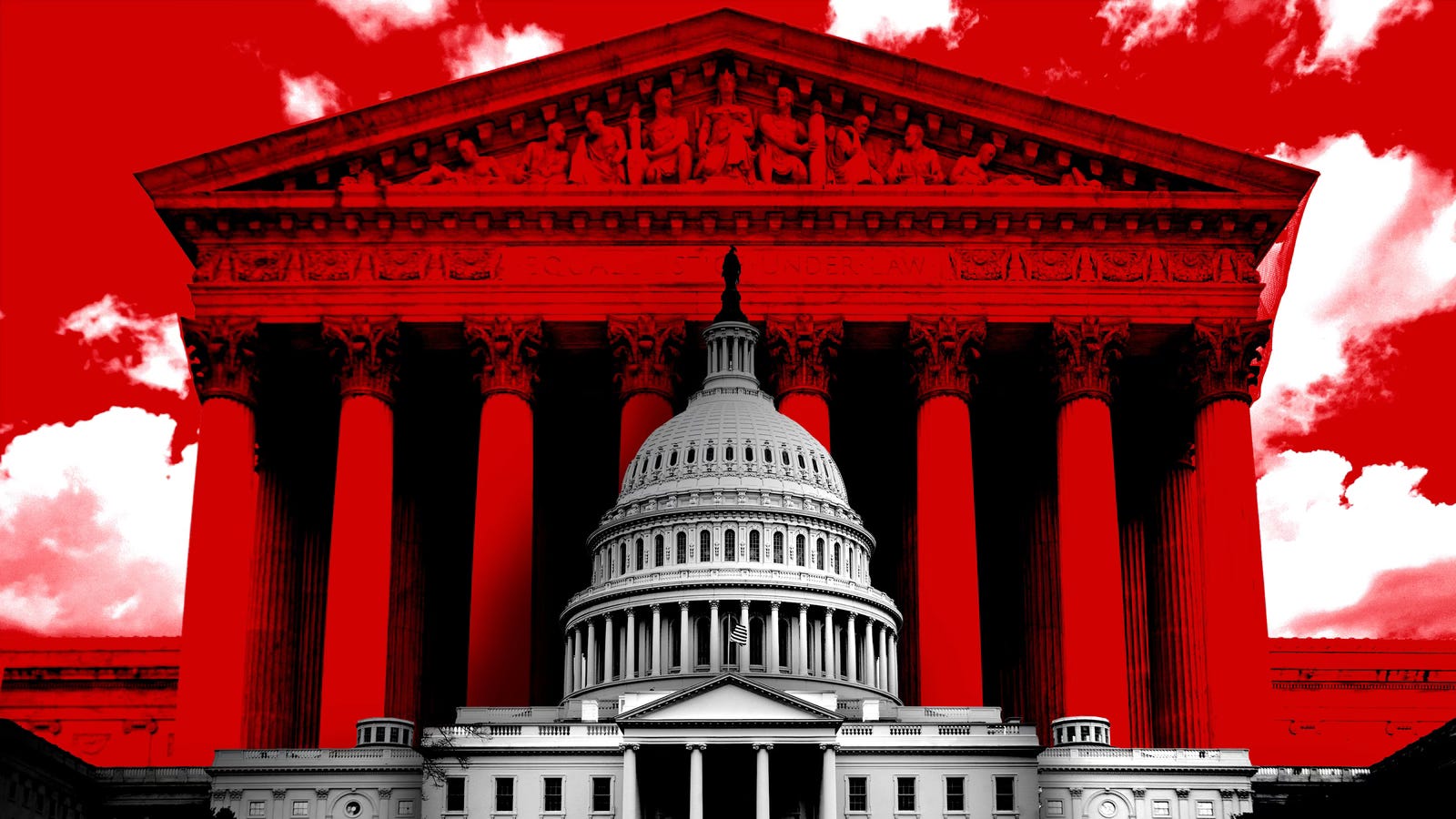
Today, the United States Supreme Court overturned a Trump-era interpretation of the National Firearms Act of 1934, effectively legalizing the conversion of semiautomatic rifles into machine guns using bump stocks. This ultra-conservative court ruling has sparked intense debate and concern about the implications for public safety and gun control in our country.
Background: The National Firearms Act and Bump Stocks
The National Firearms Act of 1934 (NFA) was originally enacted to regulate the sale and possession of machine guns and other firearms deemed to be particularly dangerous. Under the NFA, the sale of machine guns for civilian use has been strictly prohibited. However, a loophole emerged with the development of bump stocks—a device that can be attached to semiautomatic rifles, enabling them to fire at a rate similar to that of machine guns.
Bump stocks gained national attention following the tragic mass shooting in Las Vegas, Nevada, in 2017. In this horrific event, a gunman used semiautomatic rifles equipped with bump stocks to unleash a rapid barrage of bullets, killing 58 people and wounding over 500 more. This incident remains the deadliest mass shooting in U.S. history.
In response, the Bureau of Alcohol, Tobacco, Firearms and Explosives (ATF) revised its interpretation of the NFA, classifying bump stocks as machine guns, thus making their sale and possession illegal. This regulatory change aimed to prevent the circumvention of the NFA's original intent to restrict access to rapid-fire weapons.

The Supreme Court’s Decision
The recent Supreme Court ruling, however, overturned the ATF's revised interpretation. By a narrow majority, the court ruled that bump stocks do not fall under the NFA's definition of a machine gun, thus lifting the ban on these devices. This decision has been met with significant controversy, as many see it as a step backward in efforts to curb gun violence and mass shootings.
“Today, the Court puts bump stocks back in civilian hands. To do so, it casts aside Congress’s definition of “machinegun” and seizes upon one that is inconsistent with the ordinary meaning of the statutory text and unsupported by context or purpose. When I see a bird that walks like a duck, swims like a duck, and quacks like a duck, I call that bird a duck. A bump-stock-equipped semiautomatic rifle fires “automatically more than one shot, without manual reloading, by a single function of the trigger.” §5845(b). Because I, like Congress, call that a machinegun, I respectfully dissent.” - Justice Sonya Sotomayor
Executive Authority and the Importance of Legislative Intent
One critical aspect of this issue is the role of the executive branch in interpreting laws and creating rules that align with Congress's statutory purposes. The ATF's revised interpretation of the NFA was an exercise of executive authority intended to close a loophole that allowed for the creation of machine gun-like weapons. This action was based on the premise that regulatory agencies have the authority to implement rules that protect the public and uphold the legislative intent of Congress.
The Supreme Court’s decision undermines this principle by narrowly interpreting the NFA and disregarding the broader purpose of the law—to restrict access to dangerous, rapid-fire firearms. This ruling highlights the tension between the judiciary and the executive branch in interpreting and enforcing laws, and raises questions about the future of gun control legislation in the United States.

Implications for Public Safety
The legalization of bump stocks poses a significant threat to public safety. These devices allow for the conversion of widely available semiautomatic rifles into weapons capable of firing hundreds of rounds per minute, increasing the potential for mass casualties in shooting incidents. The Las Vegas shooting is a stark reminder of the devastating impact that such devices can have.
As we move forward, it is crucial to consider the broader implications of this ruling and to advocate for policies that prioritize public safety and the prevention of gun violence. The executive branch must continue to find ways to interpret and enforce laws in a manner that aligns with their original intent, and Congress must consider legislative measures to close loopholes and strengthen gun control regulations.
The Supreme Court's decision to overturn the ban on bump stocks is a significant and controversial development in the ongoing debate over gun control in the United States. It underscores the importance of vigilant interpretation and enforcement of laws to protect public safety and uphold the statutory purposes intended by Congress. As we navigate this complex issue, let us remain committed to advocating for policies that promote a safer and more secure society for all Americans.
With the upcoming elections in November, it is crucial to consider the positions of candidates on gun control measures. Voting for candidates who support a ban on bump stocks and all assault weapons is a vital step toward ensuring public safety and preventing future tragedies. Your vote can make a difference in shaping policies that protect our communities from gun violence.